.png) English
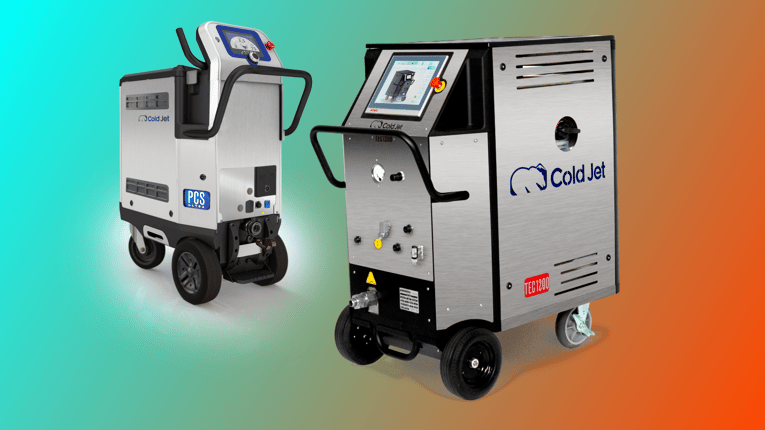
EnglishThe TEC1200 combines the cryogenic cleaning power of dry ice with an energized heated air flow to create the most powerful dry ice blasting experience.
Key Takeaways:
Cold Jet is introducing a new product to our lineup that will revolutionize the entire dry ice blasting industry: the TEC1200, a heat-assisted unit that pairs with our Aero2 ULTRA line of dry ice blasters. The TEC1200 cleans up to 25 times faster than standard dry ice blasting and removes tightly bonded paint, epoxy, coatings, and hardened adhesives from substrates that were previously out of reach with dry ice alone.
What is the TEC1200?
The TEC1200 (Thermally Enhanced Cleaning) is a supplementary device that superheats—up to 1200°F—a compressed air flow (plant air or diesel-powered air compressor). Dry ice pellets are then injected into the heated air stream via a connected Cold Jet dry ice blaster. This results in an exponentially greater kinetic impact and thermal breakdown. The TEC1200 connects seamlessly with Cold Jet’s Aero2 ULTRA series (Aero2 ULTRA PCS and Aero2 ULTRA PLT) as well as the legacy Aero2 PCS 60 unit.
How Does the TEC1200 Enhance Dry Ice Cleaning Performance?
The reasons behind why the TEC1200 works so effectively at removing even the most difficult contaminants lie in physics. Standard dry ice blasting works through three established mechanisms (kinetic energy, thermodynamic shock, and a thermal kinetic effect). The TEC1200 enhances these forces in two primary ways:
Increased Velocity and Kinetic Energy
Here is a critical equation to consider: Kinetic Energy = ½ mv2
In simpler terms, kinetic energy is derived from half the mass of the object traveling, times the velocity at which it is traveling, squared. Heat is a potent energy source, and with the TEC1200, heat energy is utilized as a velocity accelerant. In other words, the energy created by the heated air stream causes it to travel faster than standard compressed air when dry ice blasting, hitting the substrate with much more force and increasing kinetic impact.
Thermal Breakdown
Heat causes chemical bonds between particles to break down quickly in the same way heat causes ice to melt. Bonds weaken exponentially when subjected to extreme heat, loosening the bonds to substrates significantly. This bond weakening greatly assists the kinetic impact, cryogenic embrittlement, and rapid gas expansion process that also works to remove substances from surfaces in regular dry ice blasting. The result is that the heat helps the cold to do its job better.
With all these forces working together in milliseconds, tough contaminants and high-performance paint alike can be removed without damaging the surface beneath, while retaining all the benefits of standard dry ice blasting.
How Does the TEC1200 Work?
Dry ice is sent through an independent stainless-steel hose from a connected Cold Jet dry ice blasting machine to preserve dry ice integrity and prevent premature sublimation. The TEC1200 utilizes a two-hose Venturi effect system that keeps the heated compressed air separate from the dry ice flow until being combined in the patented Cone Nozzle.
Within the nozzle, the hot air and cold dry ice combine to accelerate the dry ice up to 70% faster than normal dry ice blasting and impact substrates with nearly three times the force. This compounding of force and velocity allows the TEC1200 to clean surfaces up to 25 times faster than standard dry ice blasting.
Connected Cold Jet blasting machines are remotely operated through the TEC1200 interface. All controls for the dry ice blaster—including pellet sizing, air pressure, and feed rate—can be set from the TEC1200 screen.
Why Was the TEC1200 Created?
The TEC1200 is the culmination of several years of research and development into a solution to a problem dry ice blasting has endured since its inception in the 1970s: removing tightly bonded paints, epoxies, adhesives, and coatings from surfaces without causing damage or profiling. When dry ice blasting was first introduced in the aerospace industry as a more viable and environmentally friendly means of removing paint from aircraft, the method did not work due to its non-abrasive nature.
However, Cold Jet engineers discovered that by using extreme heat to energize the compressed air used in dry ice blasting, the kinetic energy of the particles was increased significantly. Additionally, the heated air stream introduced thermal breakdown of chemical bonds. This boost in kinetic impact and introduction of thermal breakdown now enables dry ice blasting technology to remove tightly bonded and high-performance paints, coatings, epoxies, and adhesives.
What Are the Primary Applications for the TEC1200?
The TEC1200's power and performance apply across a wide variety of industries and applications, including aerospace, automotive, manufacturing, energy, and beyond. This new technology opens applications beyond what standard dry ice blasting can handle, including the removal of the following:
- Strongly bonded paint, including the kind used in commercial and military applications such as aircraft
- Epoxies and hardened resins
- Industrial barrier coatings, often found on industrial machinery and jet engine parts
- Thermally cured urethane and similar aerospace-level adhesives and seals
What Cleaning Methods Does the TEC1200 Replace?
For many years, two specific industrial cleaning methods have been used for removing paint, epoxy, coating, and hardened adhesives: laser cleaning and abrasive blasting or sandblasting. Each has its own advantages and disadvantages, but below are some of the issues users face when using these other cleaning methods:
Laser Cleaning
- Struggles to clean or remove contaminants on white, light colored, or reflective surfaces due to light reflection
- Contaminant vaporization process emits harmful toxic gases that must be vented from the work area to prevent overexposure to personnel
- If a contaminant and substrate have similar absorption rates, the cleaning is ineffective
- In an increasing number of states in the United States, laser cleaning is considered Class IV radiation equipment
- Requires significant safety measures to protect against heat damage and toxin exposure
- A licensed Laser Safety Officer (LSO) must approve cleaning process before an organization can purchase a laser cleaner
- Annual specialty inspection of laser cleaning machine must be administered by a Laser Safety Officer
Learn more about the disadvantages of laser cleaning
Abrasive/Sandblasting
- Surface abrasion required to remove tougher contaminants, paint, adhesives, and coatings introduces surface profile changes, which may damage certain substrates
- Produces secondary waste that is very time consuming to clean up afterwards and requires expensive disposal
- Blast media can get stuck inside crevices, threads, blind holes, and other sensitive areas that can cause damage or malfunction of equipment
- Creates health risks from airborne dust and requires extensive PPE to prevent complications like silicosis
Learn more about the effects of sandblasting
What Are the Innovative Design Elements and Features of the TEC1200?
Cold Jet has taken careful steps to ensure the TEC1200 has been built to meet the needs of our customers and exceed the capabilities of dry ice blasting for a vastly superior cleaning experience. Every detail has been through meticulous planning and rigorous testing over several years of research and development to produce a product built for hardcore performance. Some of the notable features of the TEC1200 include:
Superior Cold Jet Build Quality
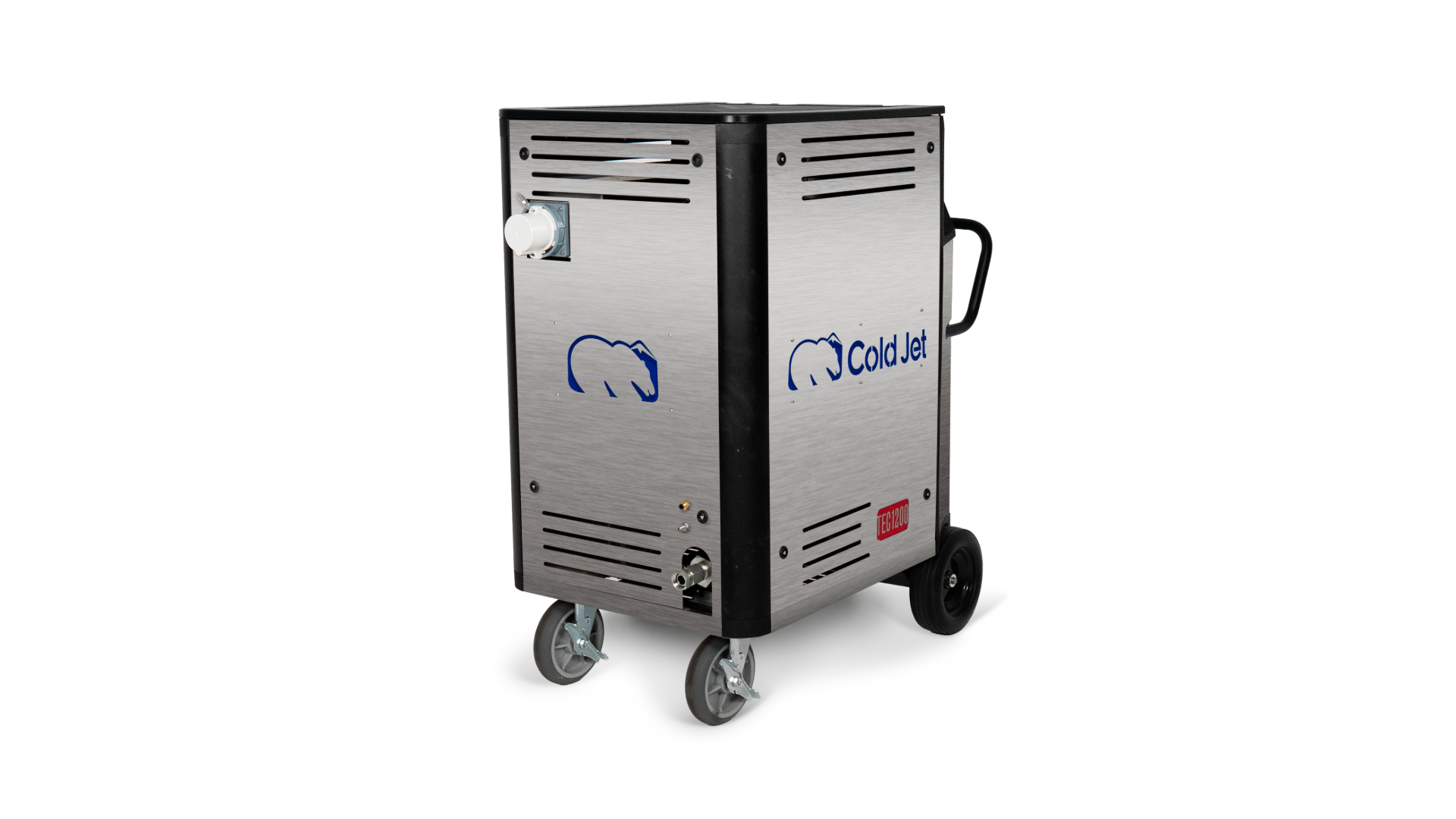
Built to the same high standards as all Cold Jet equipment, the TEC1200 is built to be robust and durable, handling just about any environment it needs to operate within to complete a task. Many of the manufacturing and technological advances from the Aero2 ULTRA series are carried over into the TEC1200, including the following:
- Sturdy rubber wheels and swiveling castors
- Industrial-grade steel casing to protect critical internal components
- Ergonomic, robust handle for improved mobility
- Industry 4.0 connectivity inside a large LCD control screen
Patented Cone Nozzle
The proprietary Cone Nozzle designed in-house by Cold Jet engineers is built to withstand the extreme temperatures of the heated air stream while maintaining multiple hours of continuous blasting. Integrating the classic Venturi two-hose system, the dry ice particles are pulled into the heated air stream through a vacuum effect and accelerated inside the nozzle, exiting at higher velocities and hitting with greater kinetic impact than standard dry ice blasting.
The nozzle is covered in a durable polyether ether ketone (PEEK) plastic shroud to protect the operator and remain safe to touch. The PEEK material is designed to withstand the extreme temperatures of the heated air produced by the TEC1200 and retain its structural integrity under heat stress.
Redesigned Blasting Applicator for Efficiency
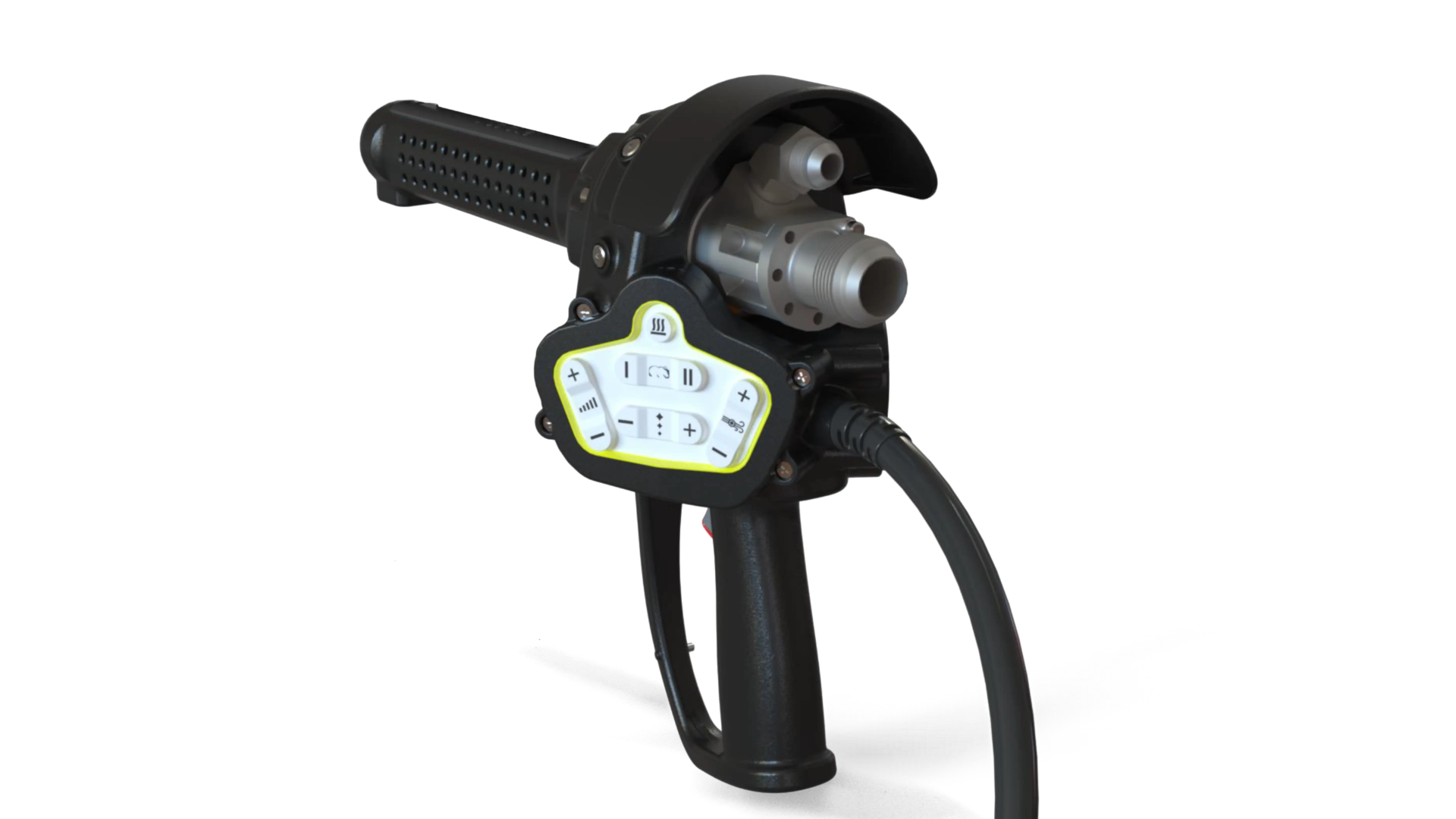
The applicator is designed to be more ergonomic, user friendly, and full of features to handle the new functionalities. The button pad has been moved to accommodate the new insulated hose system, but is ambidextrous and can be placed on either the left or right side for easy access.
Dry Ice Blasting With or Without Heat
Standard dry ice blasting can be performed without any added heat if so desired using the TEC1200. This feature is useful when switching between substrates and contaminant types that may not require additional cleaning power or are sensitive to extreme heat.
Manual Blasting and Automation Ready
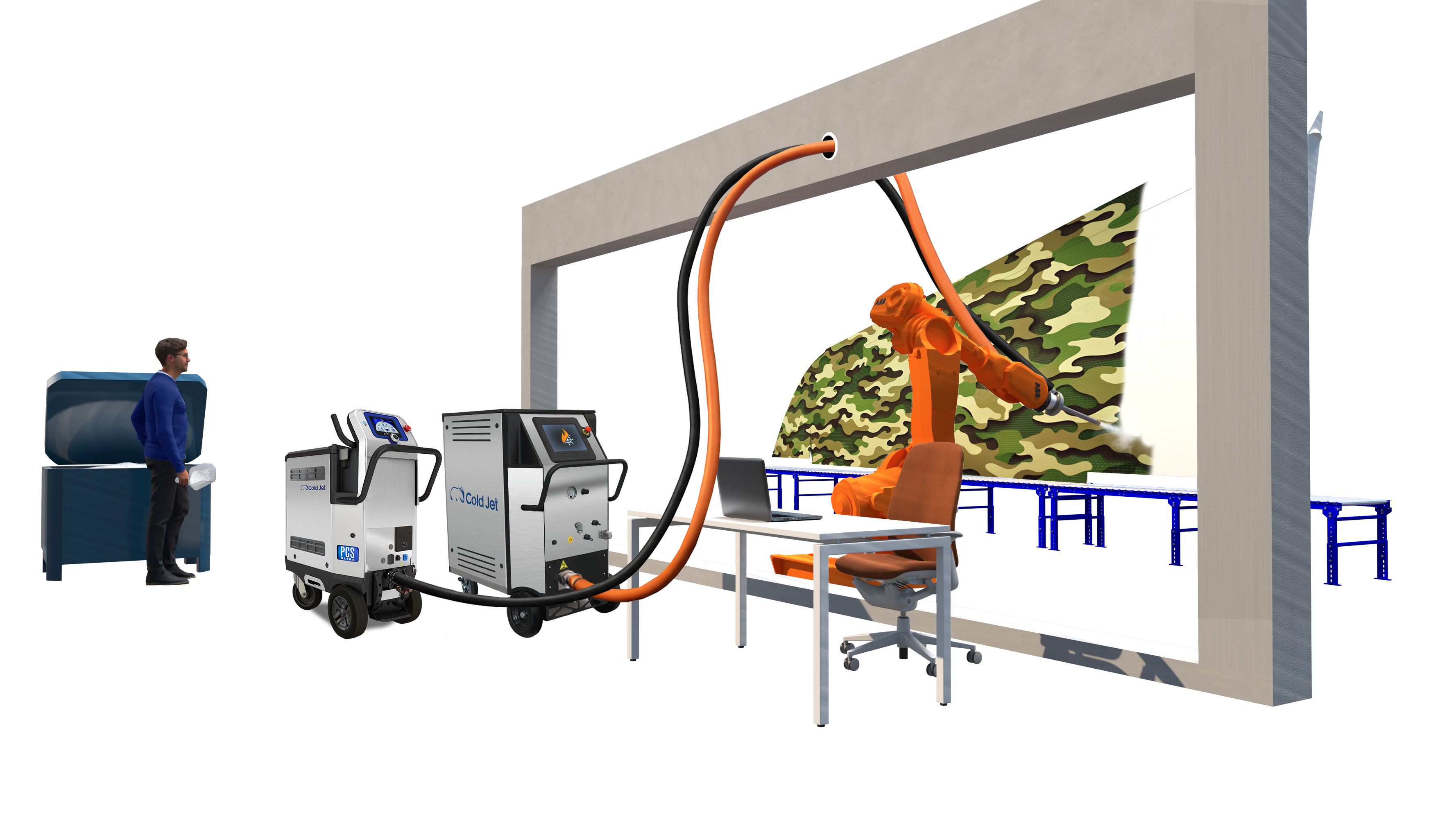
The TEC1200 can be used manually with an operator directing the blasting by hand or integrated into automated production lines. In manual blasting, an operator can use the applicator as one would in standard dry ice blasting, controlling both the dry ice blasting machine and heated air flow from the TEC1200 screen interface. Likewise, the TEC1200 can be integrated into the Level 6 plan for Cold Jet’s Integrated Blasting Solutions program, allowing the heated air stream to be utilized in cleaning, product finishing, and surface preparation tasks.
What Are the Safety Features of the TEC1200?
Since the TEC1200 can operate at such high temperatures, the machine has built-in safety features to prevent injury to personnel and damage to internal components:
Automatic Shutoff in Case of Emergency or Malfunction
If the onboard computer detects a sudden large drop in air pressure, the machine will automatically shut down so diagnostics can be performed safely. Additionally, temperature limits can be set to ensure the compressed air does not get too hot for a specific task. A flow switch also allows the compressed air to be quickly shut off in the case of a problem.
Triple-Layered Insulated Hose
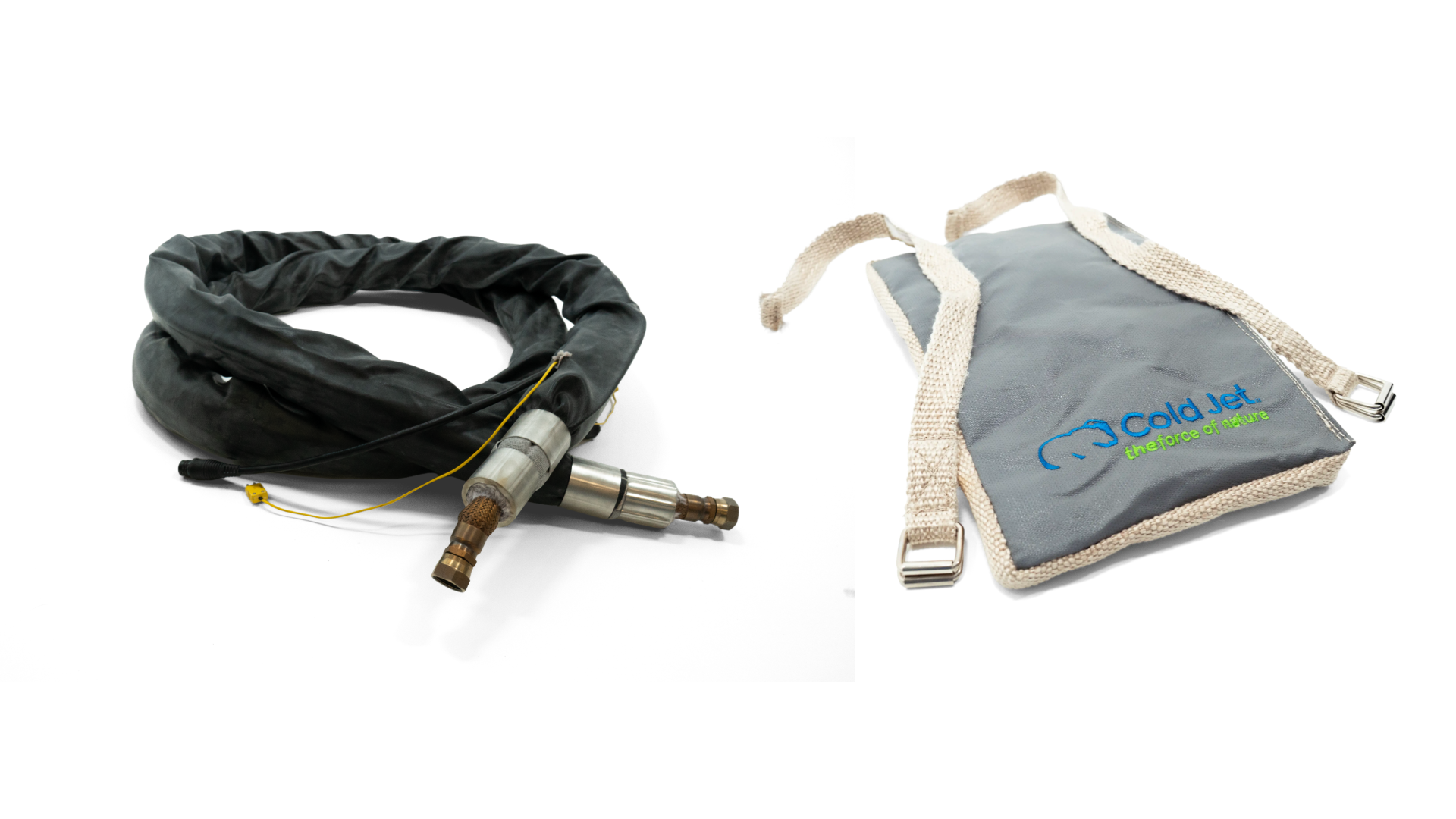
The heated air generated by the TEC1200 is sent to the applicator through a proprietary insulated hose that uses a triple layering of insulation materials with Velcro wrap to protect the operator from the extremely hot temperatures flowing through during blasting. This layering design allows operators to touch and hold the hose comfortably even while maxed out at 1200°F. Operators may also use an included optional fire sleeve at the hose connection point to the applicator for added protection.
Accessories for Improving Mobility and Handling
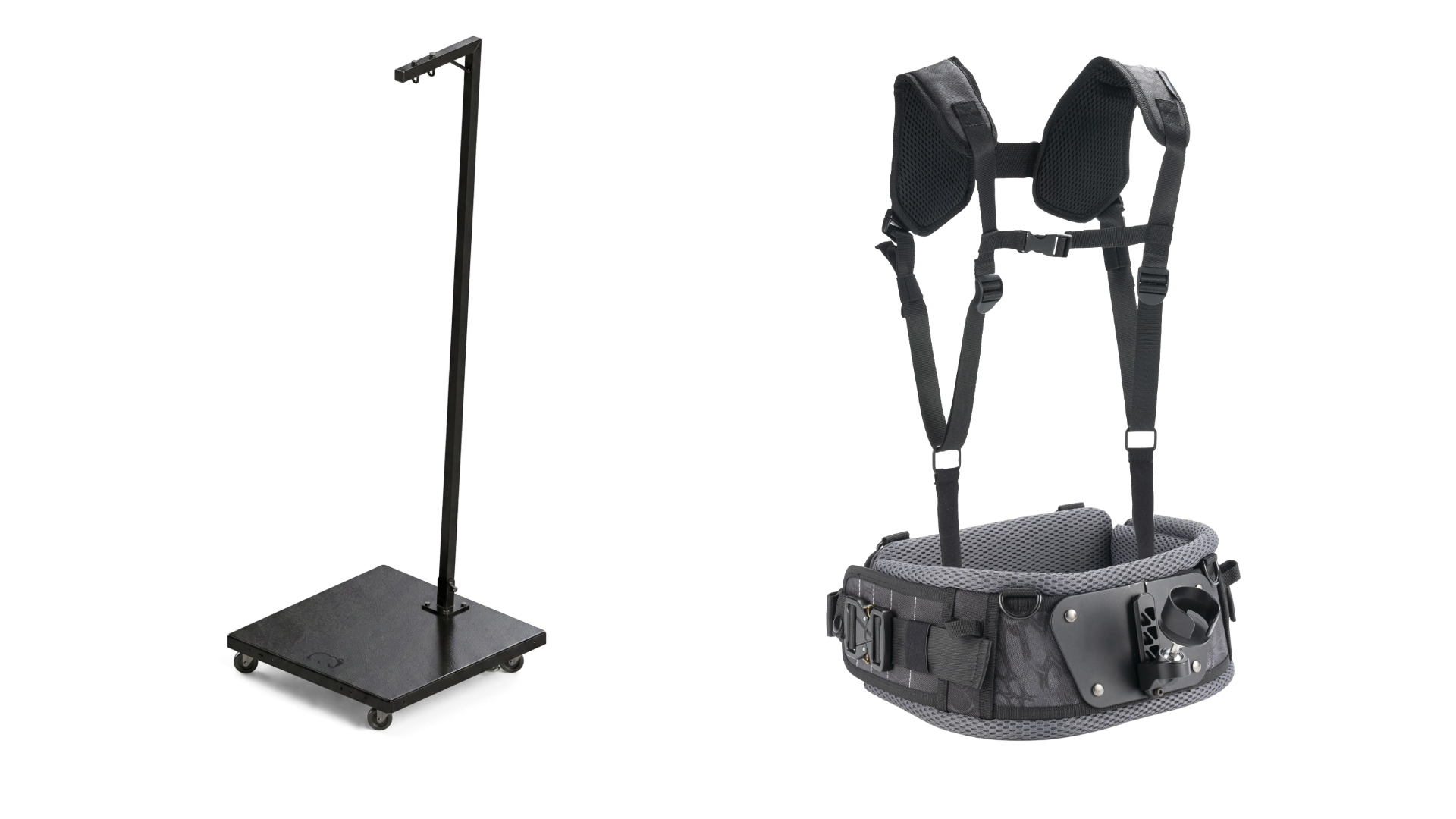
Cold Jet has created two additional equipment pieces to assist operators during manual blasting sessions to reduce user fatigue and increase mobility:
Hose Hanger Cart
This cart is a mobile platform with a reinforced metal stand and arm for hanging the extra lengths of blasting hose on during blasting. The weight and heft of the insulated hose is taken off the operator for increased comfort, handling, and mobility.
Applicator Vest
This support vest is designed to redistribute the weight of the applicator and hose to the operator’s frame, reducing arm fatigue. Additionally, an attachment on the front of the vest support belt allows the operator to handle the thrust of the nozzle during extended blasting sessions.
Required PPE
PPE needed to safely operate the TEC1200 does not significantly differ from the equipment needed to perform regular dry ice blasting, which includes safety glasses, hearing protection (in-ear or over-the-ear), and protective gloves. Additional heat protection, such as elbow-length gloves and additional clothing layers, can be worn when the operator is in a more enclosed space while using the TEC1200’s heated air functionality.
Technical Specifications
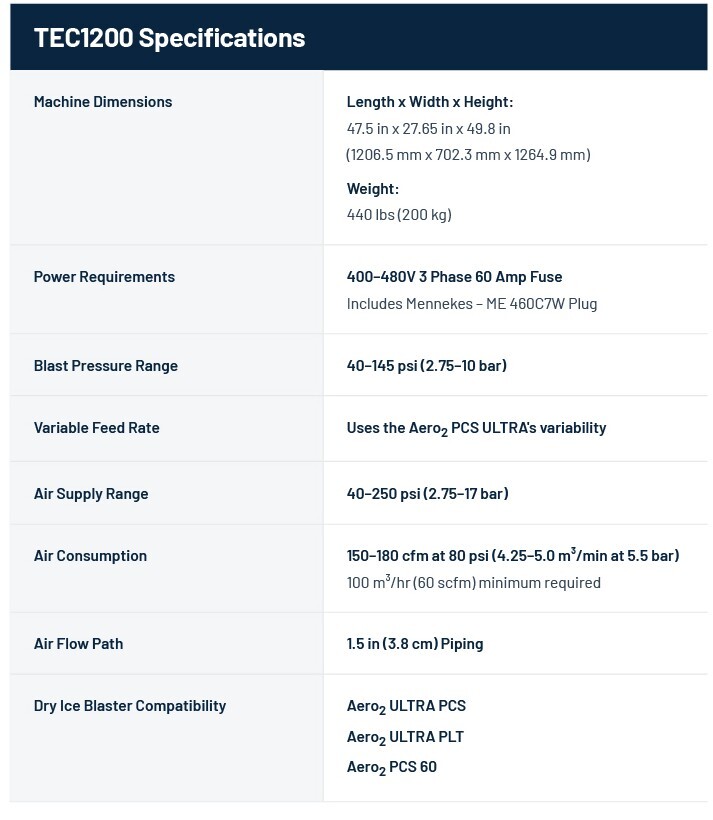
View full TEC1200 specifications
| Machine Dimensions | Length x Width x Height: 47.5 in x 27.65 in x 49.8 in (1206.5 mm x 702.3 mm x 1264.9 mm) Weight: 440 lbs (200 kg) |
|---|---|
| Power Requirements | 400–480V 3 Phase 60 Amp Fuse. Includes Mennekes ME 460C7W Plug. |
| Blast Pressure Range | 40–145 psi (2.75–10 bar) |
| Variable Feed Rate | Uses the Aero₂ PCS ULTRA's variability |
| Air Supply Range | 40–250 psi (2.75–17 bar) |
| Air Consumption | 150–180 cfm at 80 psi (4.25–5.0 m³/min at 5.5 bar). 100 m³/hr (60 scfm) minimum required. |
| Air Flow Path | 1.5 in (3.8 cm) Piping |
| Dry Ice Blaster Compatibility | Aero₂ ULTRA PCS, Aero₂ ULTRA PLT, Aero₂ PCS 60 |
Final Takeaway: The TEC1200 Will Revolutionize Dry Ice Blasting and Industrial Cleaning at Large
If you need to remove tough contaminants and industrial adhesives that just won’t let go, or are looking for a clean, efficient way to remove paint and coatings, Cold Jet has launched the ultimate tool for the job: the TEC1200. The current methods for removing these troublesome substances leave behind toxic messes and often require a series of additional steps to complete the entire process. Cold Jet now offers a new alternative to these other industrial cleaning methods that retains the advantages of dry ice blasting plus stronger, faster cleaning power.
Want a demonstration of this groundbreaking technology to see how it performs in your situation? Contact Cold Jet for more information on the TEC1200 and your industrial cleaning needs.
Have more questions about dry ice blasting? Check out our Definitive Guide to Dry Ice Blasting!