.png) English
EnglishImprove efficiency and increase production with robotically assisted dry ice blasting automation
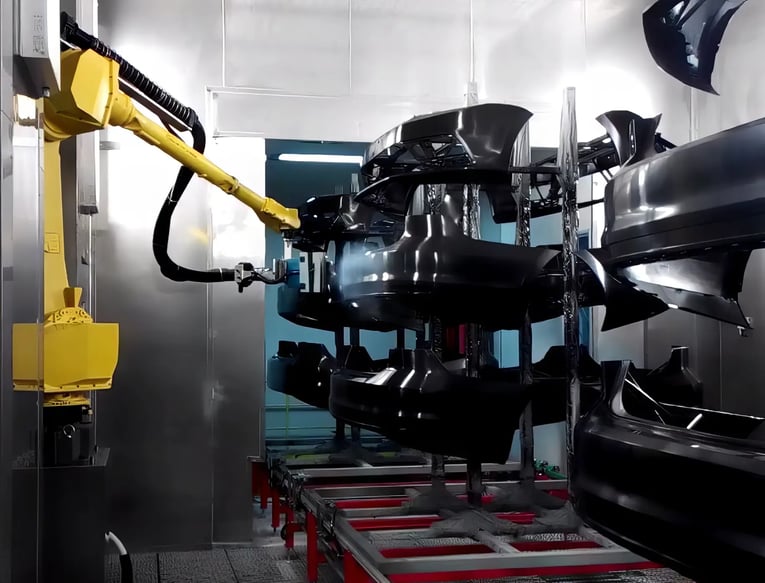
The idea of automating repetitive processes has a long history of improving efficiency, reducing downtime, and reducing the labor required to achieve a higher rate of continuous production. Introducing automation into dry ice blasting takes a critical step forward in streamlining an organization’s ability to clean and prepare surfaces as well as part finishing in manufacturing.
What is Dry Ice Blasting Automation?
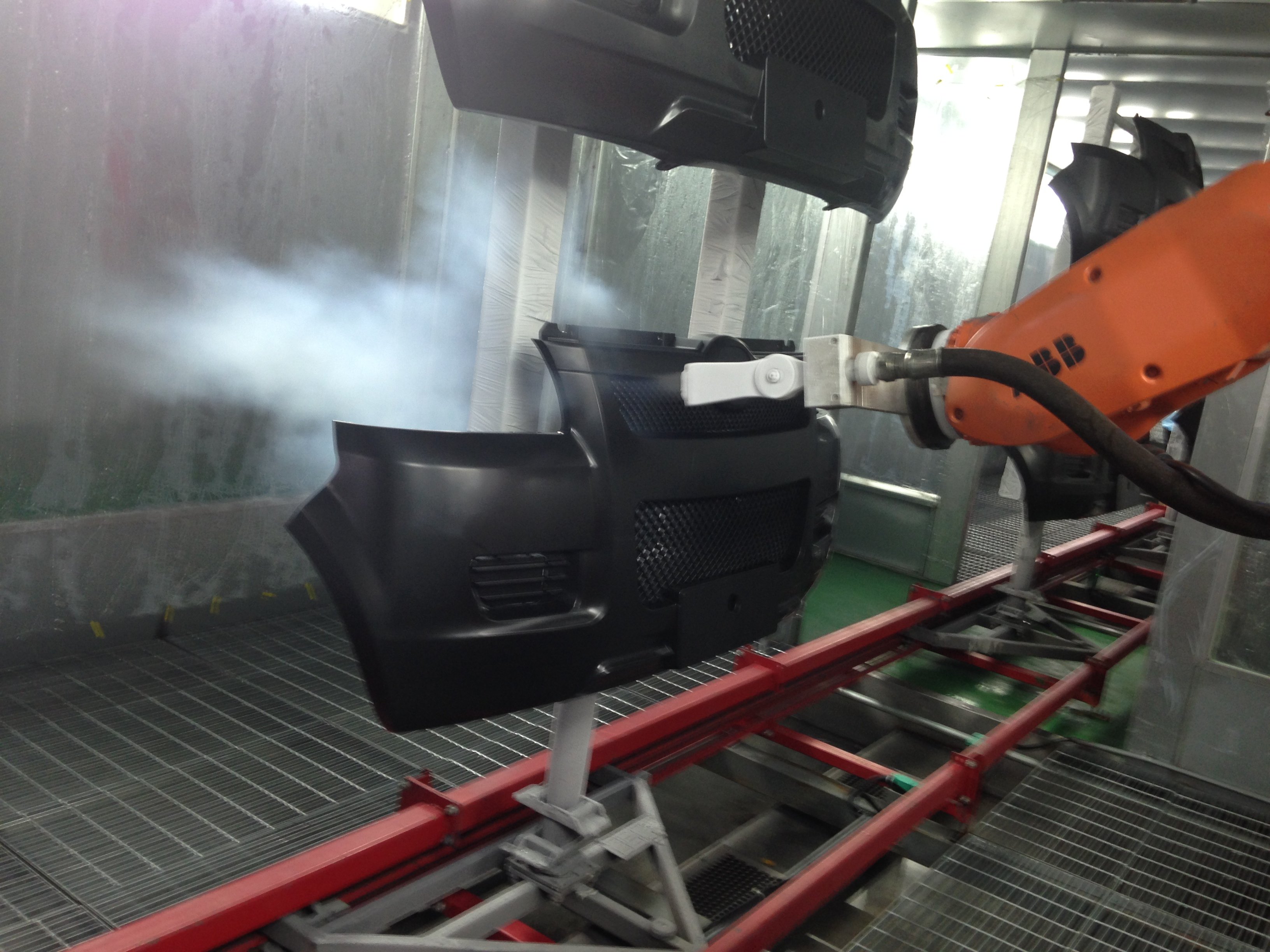
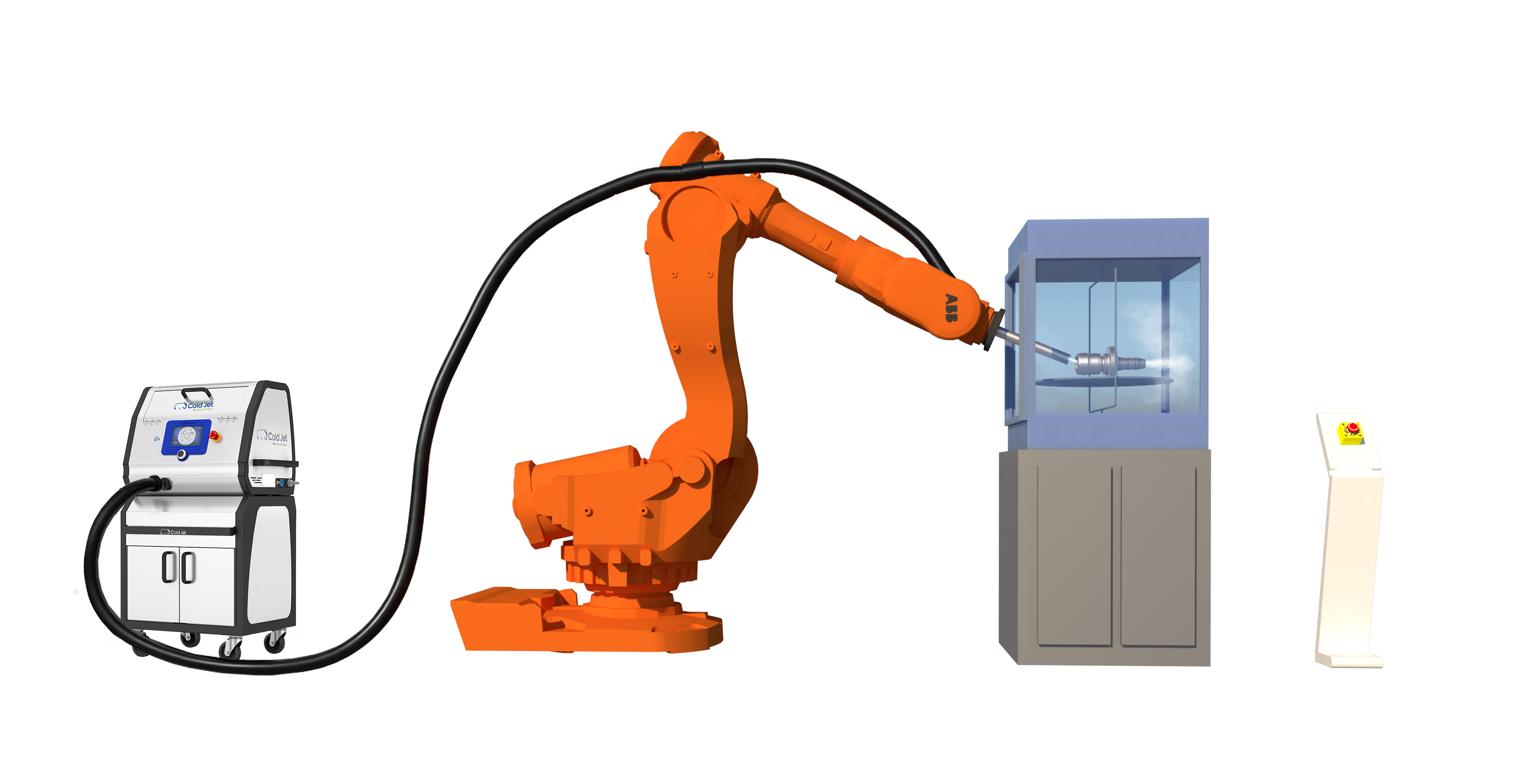
Dry ice blasting automation marries the cleaning power of dry ice blasters with the automated efficiency of a robot-assisted assembly line. A dry ice blaster is integrated with a manufacturing-tier robotic arm that can be programmed to enact cleaning in a predictable pattern. Companies that need parts or components to be cleaned and prepared in a repetitive motion can utilize automation in an assembly line-style cleaning operation without disruption to production.
Furthermore, automated dry ice blasting can be fully integrated with a company’s existing manufacturing line to provide a seamless addition to the overall manufacturing process. Automated solutions by Cold Jet are custom built to fit the needs of specific customers. Additionally, Cold Jet’s fully automated blasting systems include dry ice production equipment that feeds fresh dry ice directly into the blaster on-demand, providing a high-value process that is self-sustaining and does not require operator intervention.
Benefits of Dry Ice Blasting Automation
An automated dry ice blasting process carries many valuable benefits:
-
Complete control over particle sizing, air pressure, and dry ice consumption: Advanced dry ice blasters, like the Aero 2 PCS ULTRA, Aero 2 PLT ULTRA, and i3 MicroClean 2, grant users the ability to customize blasting settings for various applications, and can be changed easily through the control screen to suit various surfaces, contaminants, and parts
-
Utilize multiple dry ice blasters at once: Higher production systems allow multiple dry ice blasters to be operating at once through a central control panel, doubling or quadrupling the blasting power
-
Reduce labor costs: With a continuous operation set in motion, companies reduce labor expenditures while achieving higher production rates with dry ice blaster-integrated robotic arms
-
Non-stop production: Dry ice blasting can occur at any time, continually working day and night as set by your preferences and staffing availability
-
Industry 4.0 IoT process monitoring, maintenance, and troubleshooting: Advanced dry ice blasting systems like those built by Cold Jet come equipped with Cold Jet CONNECT, giving users real time data capture and assessment to ensure automated operations run without interruption
Discover how dry ice blasting automation dramatically improved the deburring process
Should You Automate the Dry Ice Blasting Process?
The decision to automate a dry ice blasting operation should consider the following factors:
What are you using dry ice blasting for?
If you are a contractor or maintenance technician focused on cleaning contaminated surfaces that require a high degree of mobility, automation may not suit your needs. However, if you use dry ice blasting consistently in a manufacturing environment or on an automated production line for cleaning, surface preparation, or part finishing such as deburring or deflashing, automated dry ice blasting could benefit your production process.
How often do you utilize a dry ice blasting system?
If you use a dry ice blaster seldomly or on an as-needed basis, automation may not justify the investment. However, if dry ice blasting is integral to your process and is used extensively, your application can very likely be automated for increased efficiency.
What rate of cleaning or production do you need to achieve to be successful?
If you can afford to clean or finish products at a slower pace, automation may not be the best fit in your situation. However, if speed, consistency, quality, and the ability to scale production needs are crucial factors in your business, then automating the blasting process will deliver significant benefits.
What are your labor needs or constraints?
If the work you perform with dry ice blasting is minimal and only needs one operator to perform the task to satisfaction, automation may be too costly for your needs. However, if labor costs and required man-hours are straining your operation, an automated blasting system with integrated robotics can significantly reduce the personnel needed to achieve success.
The Cold Jet Answer to Automation: Integrated Blasting Solutions (IBS)
The Integrated Blasting Solutions (IBS) program gives organizations the ability to partially or fully automate their dry ice blasting efforts in an assembly line format. This automated system is ideal for users who need to continuously run their dry ice blasting machines without interruption. Cold Jet automated dry ice blasting systems are designed to be customized to a specific task and application type. Additionally, all systems use the Cold Jet CONNECT system for Industry 4.0 IoT assessments, monitoring, and troubleshooting in real time.
Cold Jet is leading the charge in dry ice blasting automation, offering companies partially or fully automated blasting systems to complement their cleaning, surface preparation, and part finishing processes:
-
Semi-automated blasting systems work similarly to fully automated systems, but require an operator on-site to continuously feed dry ice pellets into the blaster to keep it functioning.
-
Fully automated blasting systems combine dry ice production and blasting into one continuous system that does not require an operator on-site to maintain functionality.
Depending on your needs, these Cold Jet IBS systems are tiered into six levels of automation complexity, as seen below:
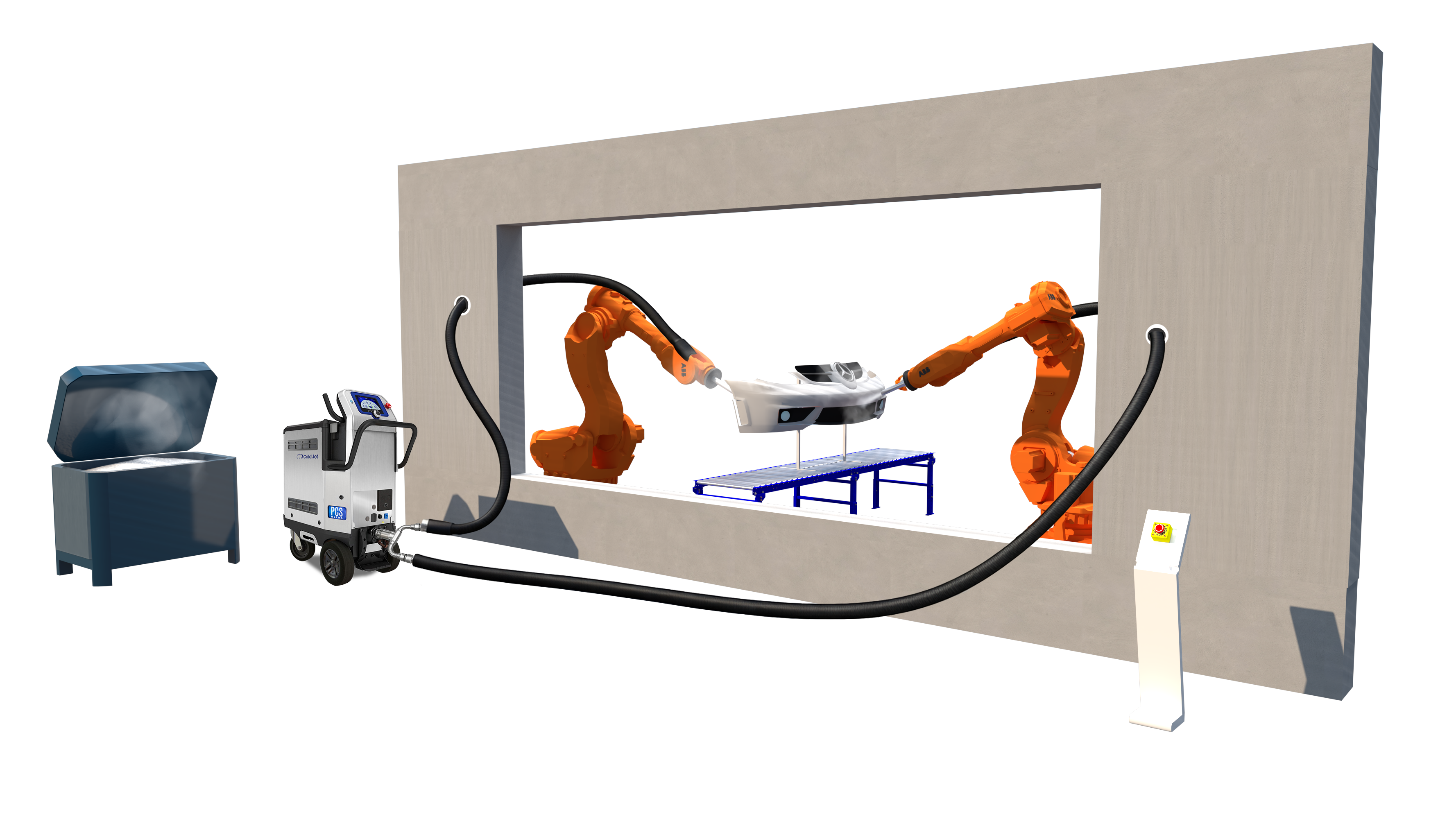
1. Semi-Automated Dry Ice Blasting Solutions
A semi-automated dry ice blasting system is ideal for smaller operations or those with limited facility space. These automated options are considered semi-automated because they require an operator to manually refill the dry ice blasting machine hopper with dry ice pellets and monitor the hopper levels during production.
Semi-automation applies to the following levels:
Level 1:
-
Dry ice blaster type: Cold Jet i3 MicroClean 2
-
Blaster outputs: 1
-
Machine hopper capacity: 25 lb (11 kg)
-
Feeder capacity with SHAVED dry ice: 0-1.5 lb/min (0 - 0.7 kg/min)
-
Dry ice consumption rate: 90 lbs/hr. (42 kg/hr.)
-
Max blast pressure: 10 bar
-
Air consumption: Up to 50 CFM / 80 PSI
-
Integration module w/ protocols:
-
EtherCAT
-
EtherNET IP
-
PROFINET
-
-
Standard & shroud nozzles
-
E-stop handshake with cleaning booth
-
Optional dehumidifier attachment
-
Upgrade option possible for existing machines
-
Manual blasting is possible
-
Manual refilling of hopper with pellets or dry ice blocks required
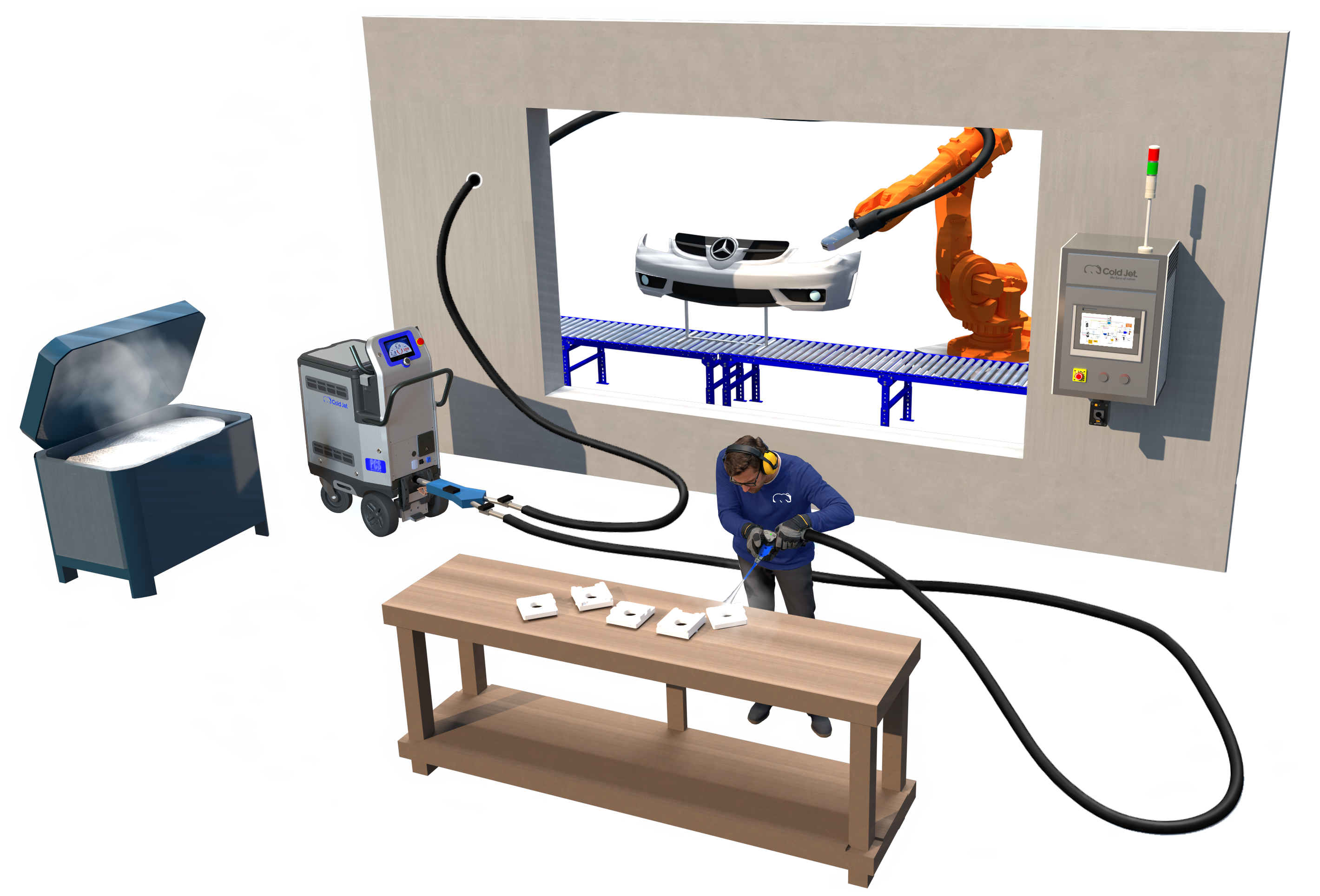
Level 2:
-
Dry ice blaster type: Cold Jet Aero 2 PCS ULTRA / Aero 2 PLT ULTRA
-
Blaster outputs: 1
-
Machine hopper capacity: 60 lb (27 kg)
-
Feeder capacity per pellet size:
-
3 mm: 4.0 lb/min (1.8 kg/min)
-
1-2.9 mm: 3.3 lb/min (1.5 kg/min)
-
0.3-0.9 mm: 2.4 lb/min (1.1 kg/min)
-
-
Dry ice consumption rate: 240 lbs/hr. (108 kg/hr.) depending on the particle size and the limitation by the feeder capacity
-
Max blast pressure: Aero 2 PCS ULTRA: 10 bar; Aero 2 PLT ULTRA: 17.2 bar
-
Air consumption: Up to 100 CFM / 80 PSI
-
Integration module w/ protocols:
-
EtherCAT
-
EtherNET IP
-
PROFINET
-
-
Standard & shroud nozzles
-
E-stop handshake with cleaning booth
-
Optional dehumidifier attachment
-
Upgrade option possible for existing machines
-
Manual blasting is possible
-
Manual refilling of hopper with pellets required
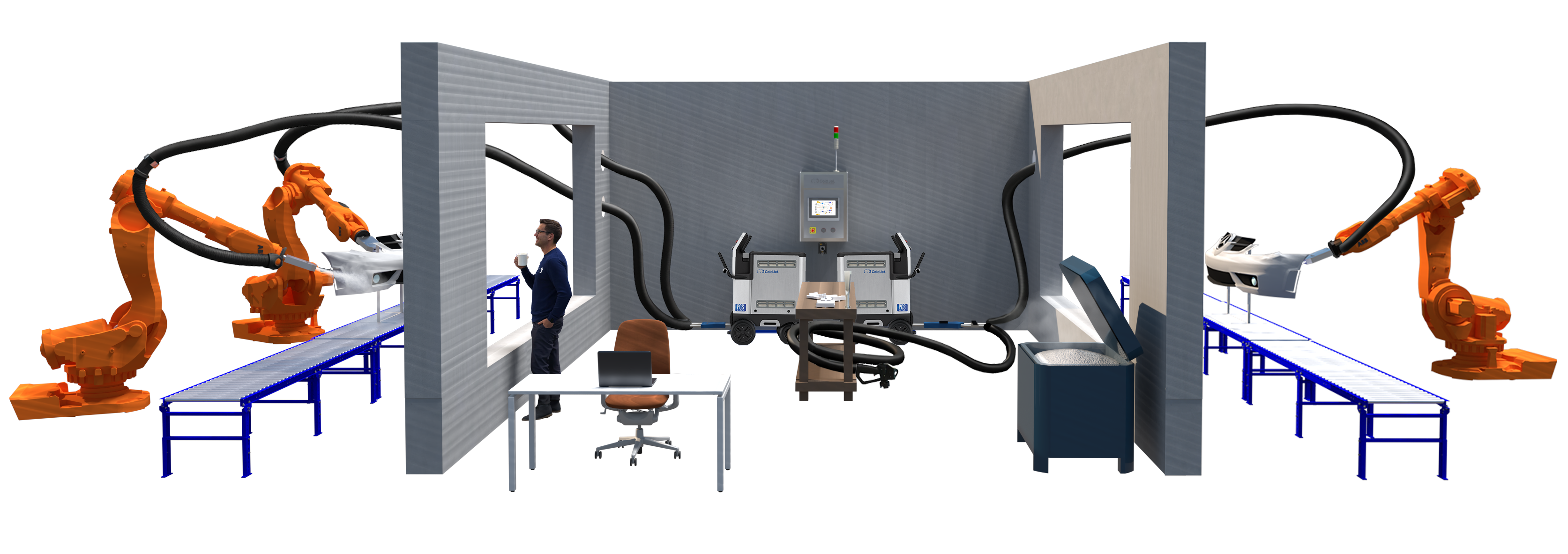
Level 3:
-
Dry ice blaster type: Cold Jet Aero 2 PCS ULTRA / Aero 2 PLT ULTRA
-
Blaster outputs: 2 or more nozzles can blast independently via automatic flow diverter
-
Machine hopper capacity: 60 lb (27 kg)
-
Feeder capacity per pellet size:
-
3 mm: 4.0 lb/min (1.8 kg/min)
-
1-2.9 mm: 3.3 lb/min (1.5 kg/min)
-
0.3-0.9 mm: 2.4 lb/min (1.1 kg/min)
-
-
Dry ice consumption rate: 240 lbs/hr. (108 kg/hr.) depending on the particle size and the limitation by the feeder capacity
-
Max blast pressure: Aero 2 PCS ULTRA: 10 bar; Aero 2 PLT ULTRA: 17.2 bar
-
Air consumption: Up to 100 CFM / 80 PSI
-
Integration module w/ protocols:
-
EtherCAT
-
EtherNET IP
-
PROFINET
-
-
Standard, shroud, and heated nozzles
-
E-stop handshake with cleaning booth
-
Optional dehumidifier attachment and empty hopper
-
Upgrade option possible for existing machines
-
Master controller monitors all nozzles and provides online support
-
Manual refilling of hopper with pellets required
Level 4:
-
Dry ice blaster type: 2 Cold Jet Aero 2 PCS ULTRAs / Aero 2 PLT ULTRAs
-
Blaster outputs: 2 or more nozzles can blast independently via automatic flow diverter
-
Machine hopper capacity: 60 lb (27 kg)
-
Feeder capacity per pellet size:
-
3 mm: 4.0 lb/min (1.8 kg/min)
-
1-2.9 mm: 3.3 lb/min (1.5 kg/min)
-
0.3-0.9 mm: 2.4 lb/min (1.1 kg/min)
-
-
Dry ice consumption rate: 240 lbs/hr. (108 kg/hr.) depending on the particle size and the limitation by the feeder capacity
-
Max blast pressure (per machine): Aero 2 PCS ULTRA: 10 bar; Aero 2 PLT ULTRA: 17.2 bar
-
Air consumption (per machine): Up to 100 CFM / 80 PSI
-
Standard, shroud, and heated nozzles
-
E-stop handshake with cleaning booth
-
Optional dehumidifier attachment
-
Upgrade option possible for existing machines
-
Master controller monitors all blasters, nozzles, and provides online support
-
Manual refilling of hopper with pellets required
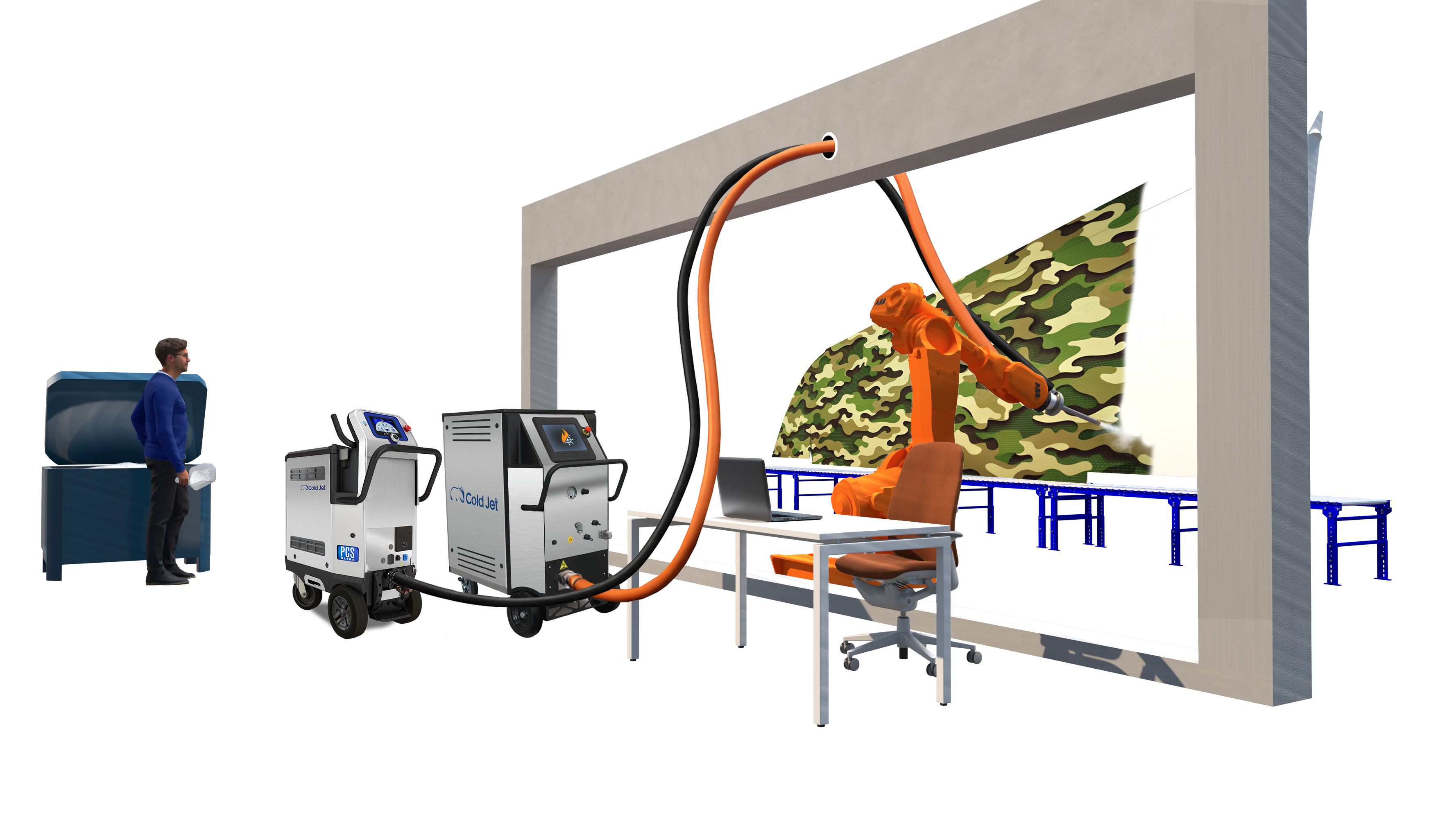
Level 6:
-
Dry ice blaster type: Cold Jet Aero 2 PCS ULTRA / Aero 2 PLT ULTRA and TEC 1200 Heat Assisted Blasting unit
-
Blaster outputs: 1
-
Machine hopper capacity: 60 lb (27 kg)
-
Feeder capacity per pellet size:
-
3 mm: 4.0 lb/min (1.8 kg/min)
-
1-2.9 mm: 3.3 lb/min (1.5 kg/min)
-
0.3-0.9 mm: 2.4 lb/min (1.1 kg/min)
-
-
Dry ice consumption rate: 240 lbs/hr. (108 kg/hr.) depending on the particle size and the limitation by the feeder capacity
-
Max blast pressure: Aero 2 PCS ULTRA: 10 bar; Aero 2 PLT ULTRA: 17.2 bar
-
Air consumption: Up to 100 CFM / 80 PSI
-
Standard, shroud, and heated nozzles as part of Designated Nozzle Portfolio
-
E-stop handshake with cleaning booth
-
Master controller monitors the blaster, nozzle, and provides online support
-
Manual refilling of hopper with pellets required
2. Fully Automated Dry Ice Blasting Solution
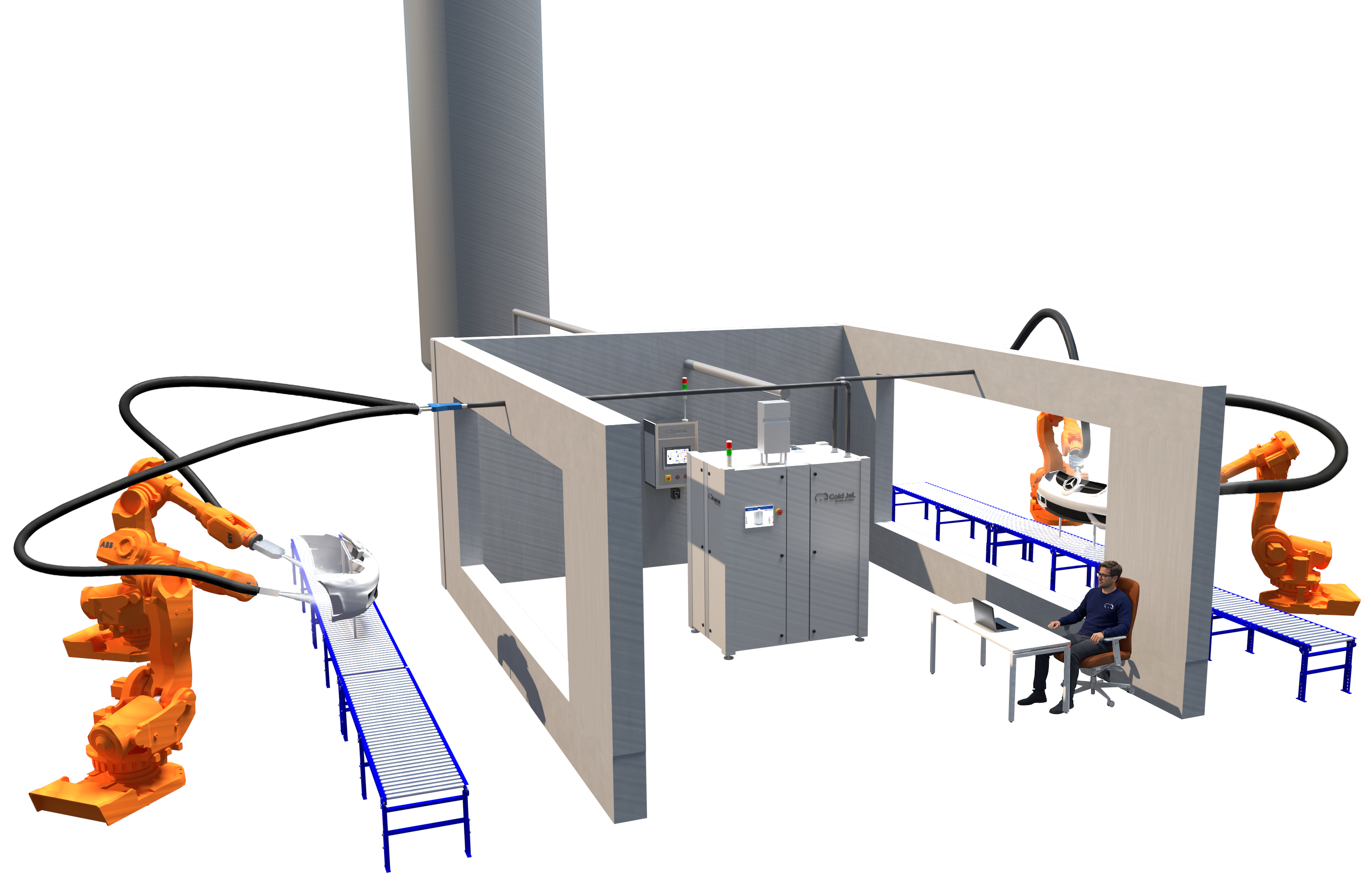
A fully automated dry ice blasting system is ideal for larger operations, those that run production 24/7, or those with more dedicated facility space in which to house all components of the full dry ice system. These automated options are considered fully automated because they do not require an operator nor do they use a standard dry ice blasting machine like the Aero 2 series. The dry ice hopper is fed with fresh dry ice pellets created by a pelletizer, which is itself fed with liquid CO2 from an on-site storage tank. All steps of the blasting process, from dry ice production to blasting, are handled by the machinery and can be monitored by an operator remotely.
Cold Jet offers a full complement of pelletizers and integrated blasting equipment to form the COMBI PCS systems, which include the COMBI PCS 110 Dual and COMBI PCS 320 Dual.
Full automation applies to the following levels:
Level 5A:
-
Dry ice blaster type: Cold Jet COMBI PCS 110 Dual
-
Blaster outputs: Up to 4 with blast stream splitters; diverters also available
-
Pellet production capacity maximum: 242 lbs/hr. (110 kg/hr.)
-
Feeder capacity per pellet size:
-
3 mm: 4.0 lb/min (1.8 kg/min)
-
1-2.9 mm: 3.3 lb/min (1.5 kg/min)
-
0.3-0.9 mm: 2.4 lb/min (1.1 kg/min)
-
-
Dry ice consumption rate: 240 lbs/hr. (108 kg/hr.) limited by the full production capacity; will serve 2 blasting outlets, thereby sharing the entire production capacity
-
Max blast pressure: 16 bar
-
Air consumption: Up to 388 CFM / 80 PSI
-
Standard, shroud, and heated nozzles as part of Designated Nozzle Portfolio
-
E-stop handshake with cleaning booth
-
Master controller monitors the blaster, nozzle, and provides online support
-
Automated refilling of hopper with pellets
Level 5B:
-
Dry ice blaster type: Cold Jet COMBI PCS 320 Dual
-
Blaster outputs: Up to 4 with blast stream splitters; diverters also available
-
Pellet production capacity maximum: 705 lbs/hr. (320 kg/hr.)
-
Feeder capacity per pellet size:
-
3 mm: 4.0 lb/min (1.8 kg/min)
-
1-2.9 mm: 3.3 lb/min (1.5 kg/min)
-
0.3-0.9 mm: 2.4 lb/min (1.1 kg/min)
-
-
Dry ice consumption rate: 485 lbs/hr. (220 kg/hr.) for both blasting units, depending on the particle size and the limitation of the feeder capacity; full production capacity to serve 2 blasting outlets
-
Max blast pressure: 16 bar
-
Air consumption: Up to 388 CFM / 80 PSI
-
Standard, shroud, and heated nozzles as part of Designated Nozzle Portfolio
-
E-stop handshake with cleaning booth
-
Master controller monitors the blaster, nozzle, and provides online support
-
Automated refilling of hopper with pellets
Key Takeaways: Automated Dry Ice Blasting Increases Efficiency and Boosts Production
Whether a cleaning or product finishing operation is big or small, automated dry ice blasting can increase production through labor efficiency and very little downtime. Repetitive cleaning patterns can be programmed into robotic systems to deliver the same high-quality results every time. Additionally, larger operations can remove the human element almost entirely through fully automated blasting systems that produce dry ice, feed it into the blasting systems, and perform the task needed in one large assembly line process.
If your organization can benefit from a partially or fully automated dry ice blasting system, contact Cold Jet to see how our customizable solutions can improve your productivity!
Have more questions about dry ice blasting? Check out our Definitive Guide to Dry Ice Blasting!