.png) English
English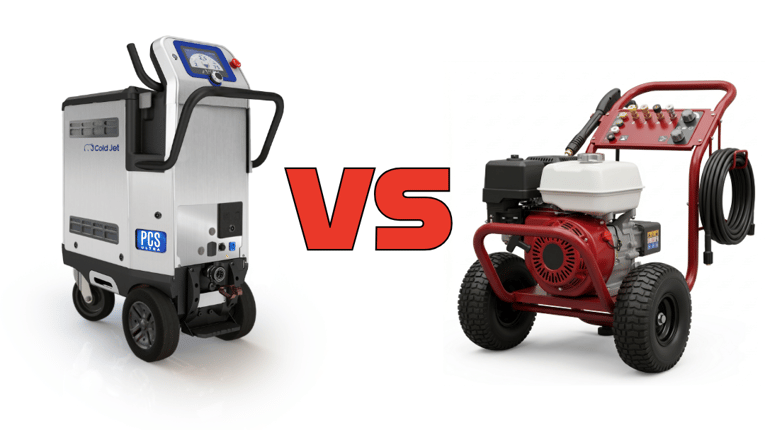
Which Method Better Removes Contaminants: Dry Ice Blasting or Pressure Washing?
Key Takeaways:
What is Pressure Washing?
Pressure washing is a surface cleaning method that utilizes a high-pressure sprayer to blast water at a substrate to remove contaminants. This technique relies primarily on the kinetic energy and mechanical impact of the pressurized water stream to break the physical bonds between contaminants and the material beneath. Pressure washers are typically connected to a high-capacity water source by hose that can provide adequate water pressure and a steady flow of water to complete cleaning tasks. An internal motor or engine creates the extreme pressures needed and pushes the water out at high speeds to enact the mechanical impact cleaning action.
Unlike other blasting cleaning methods that rely on compressed air as an accelerant, pressure washing instead relies on higher water PSI (Pounds per Square Inch) to enact cleaning. The standard industrial PSI ranges for power washers typically fall between 3,000 to 5,000 PSI. Higher-performing pressure washers capable of ultra-high pressure (UHP) levels can reach 15,000 to 20,000+ PSI for removing heavy scale, paint, or biological growth.
Additionally, no air flow means no CFM (Cubic Feet per Minute) rating, so pressure washers use GPM (Gallons per Minute) to measure water volume flow rate. The amount of water needed is related to the additional flushing action needed to rinse away contaminants once they have been removed from the substrate. Light cleaning tasks can use as little as 1.5 to 2.5 GPM (90 to 150 gallons per hour), and heavy-duty industrial tasks can consume 4 to 8 GPM (240 to 480 gallons per hour).
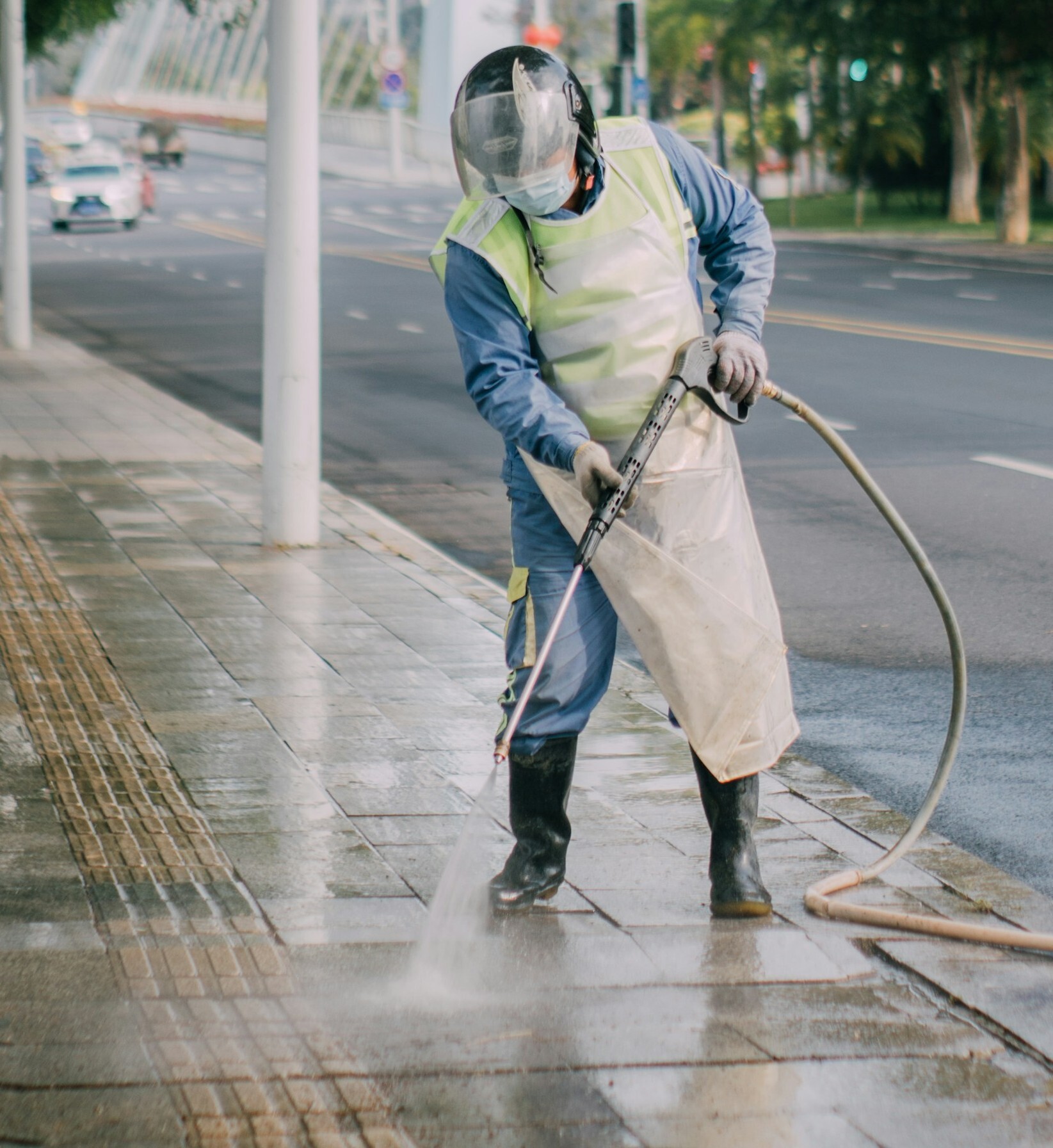
Photo by Shawn Rain on Unsplash
Pressure washers come in three types:
1. Electric:
Pressure washers powered by electricity typically plug into any standard electrical outlet and are used most in applications requiring less aggressive cleaning. These pressure washers are typically used in places where gas and diesel variants cannot operate due to exhaust emissions, such as food processing plants, laboratories, residential spaces, and other sensitive environments. While considered small and efficient, electric pressure washers are often less powerful compared to the other variants and are limited to lower water flow rates (up to 2.5 GPM).
2. Gasoline:
Pressure washers powered by gasoline are best used for medium to heavy-duty cleaning tasks in outdoor or large, open areas with better ventilation. Gas-powered units are preferred for their mix of high mobility and standard 3,000 to 5,000 PSI ranges, offering up to 4 GPM.
3. Diesel:
Pressure washers powered by diesel fuel are the most powerful machines and offer the highest pressures and flow rates needed for industrial-level tasks (up to 8 GPM). Almost exclusively used outdoors, diesel-powered machines are used for removing the toughest contaminants such as marine growth, sludge in storage tanks, and significant contaminant buildup.
Power washing often refers to pressure washers that utilize heated water to clean substrates, adding thermal energy to further weaken contaminant bonds and break down specific substances such as oils, fats, and grease. Power washers typically can reach a water temperature of up to 250°F (121°C), and specialized industrial-grade units meant for extreme tasks can reach up to 320°F (160°C).
What is Dry Ice Blasting?
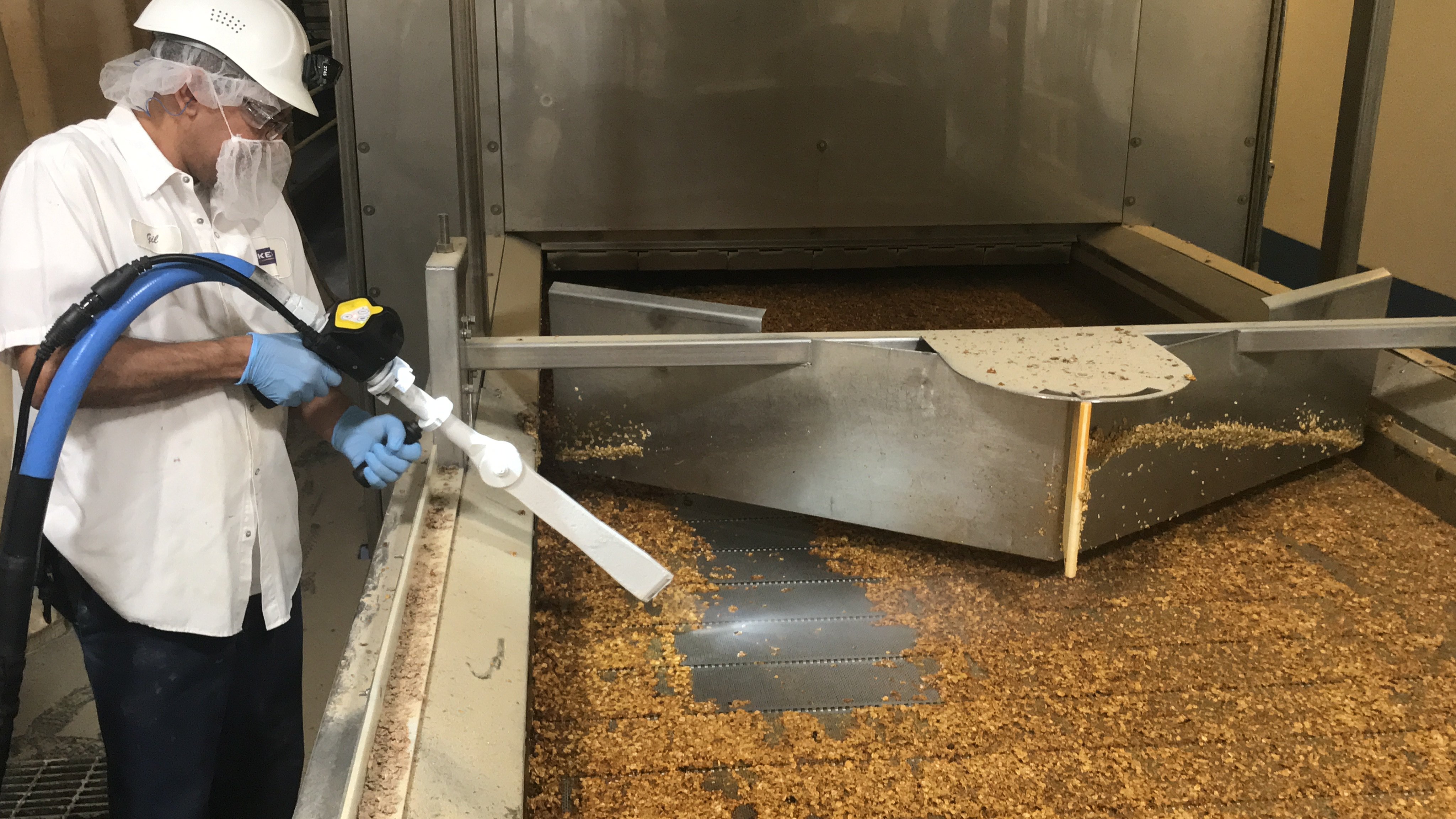
Dry ice blasting uses high-density dry ice pellets (recycled solid CO2) accelerated at high velocity to remove contaminants through a combination of kinetic impact, thermal shock, and rapid gas expansion. These actions occur simultaneously within milliseconds, breaking the bond between the contaminant and the substrate.
During operation, dry ice pellets are loaded into an insulated hopper where they are continuously agitated to prevent clumping and ensure consistent flow. Compressed air then propels the pellets through an insulated hose to the blasting applicator, where they are discharged through a specialized nozzle. Upon impact, the dry ice pellets instantly sublimate from solid to gas, rapidly expanding and lifting contaminants from the surface without leaving secondary waste behind.
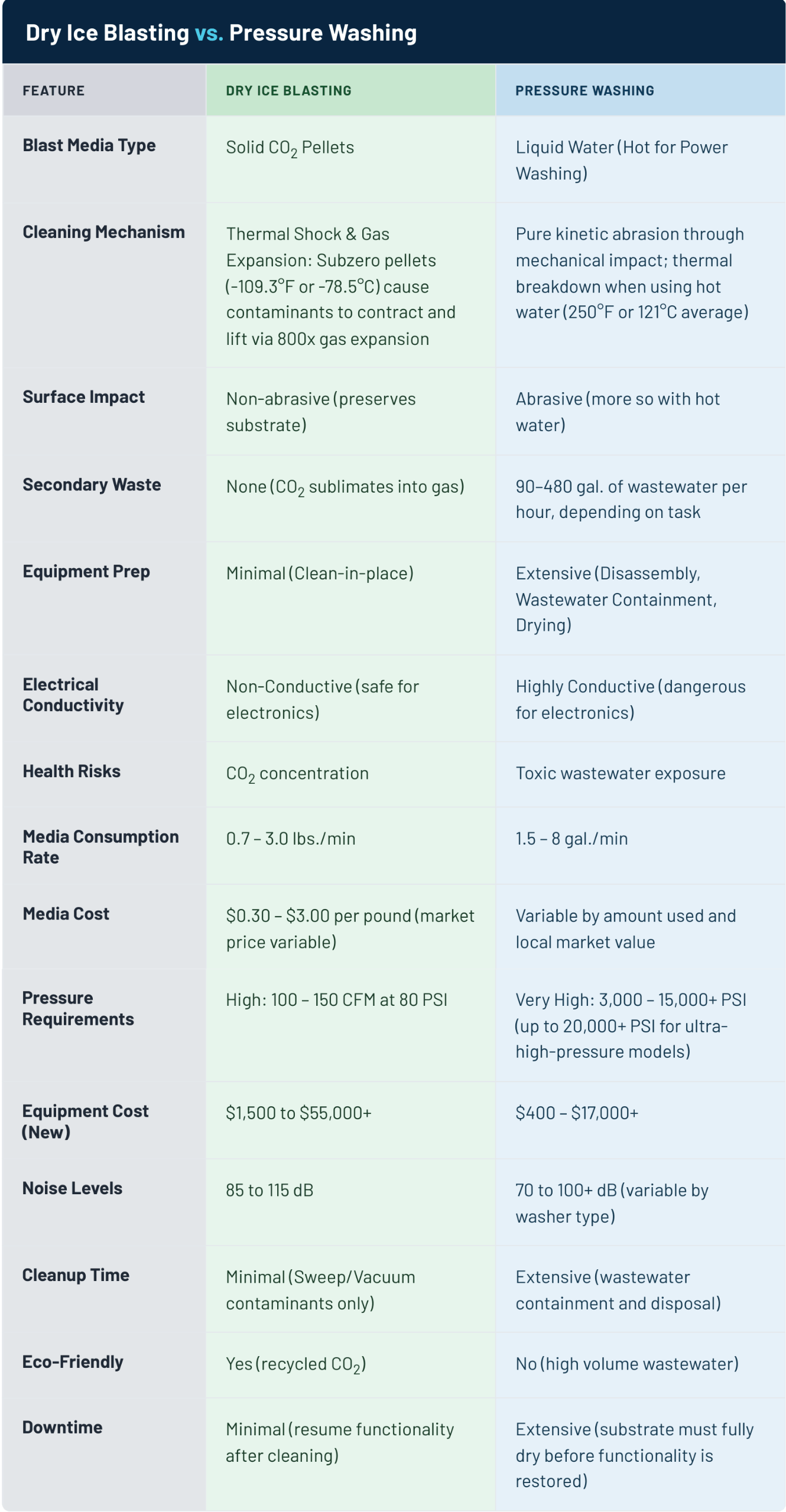
Comparative Analysis: Dry Ice Blasting vs. Pressure Washing
The following table highlights the operational differences between dry ice blasting and pressure washing:
How is Pressure Washing Similar to Dry Ice Blasting?
Dry ice blasting and pressure washing share several similarities in how they both achieve clean surfaces:
Dislodge contaminants with kinetic energy:
Both dry ice blasting and pressure washing use kinetic impact at high velocity to forcibly break contaminant bonds, but with a major difference: pressure washing uses highly pressurized water streams (sometimes combined with heat) while dry ice blasting uses dry ice with cryogenic properties to embrittle contaminants for removal.
Quick cleaning:
Dry ice blasting and pressure washing remove contaminants from surfaces within several minutes to achieve cleaning.
Cleans many different types of contaminants:
Dry ice blasters like the Cold Jet Aero2 PCS ULTRA can adjust settings for pellet size, PSI, and dry ice consumption rate to adapt to different contaminants. Pressure washing uses various high PSI levels as well as thermal assistance (power washers only) to achieve suitable cleaning power for a variety of applications.
Suitable for a wide variety of surfaces:
Both methods can clean a wide variety of substrates, including strong metal, glass, concrete, asphalt, hardened wood, stone, vinyl, fiberglass, brick, and stucco. Lower PSI must be used for the more sensitive surfaces on this list to avoid damage from pressure washing.
Popular in similar industries:
Both cleaning technologies are well-received in the heavy equipment, food and beverage, automotive, oil & gas, and manufacturing industries.
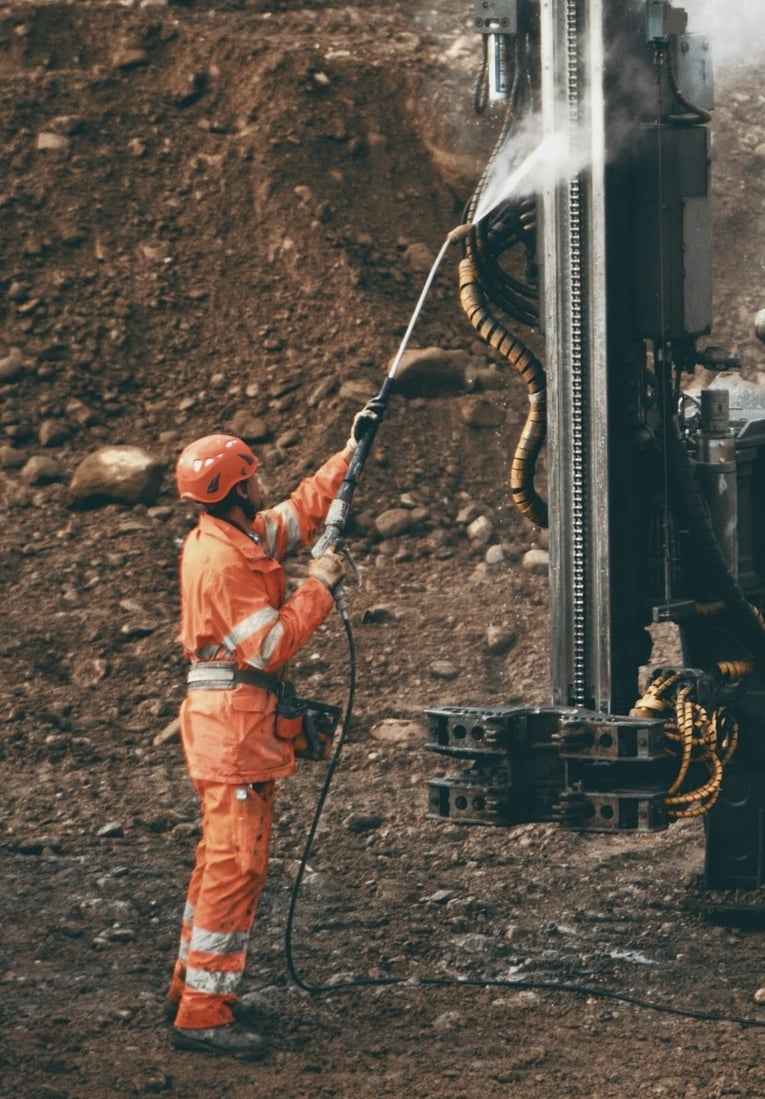
Photo by Janik on Unsplash
What Are the Limitations of Pressure Washing?
Pressure washing is very effective at cutting through exterior grime and grease, but this water-based cleaning method has specific limitations in its use for cleaning:
1. Pressure washing creates significant secondary liquid waste that must be contained and disposed of afterwards:
Pressure washing uses a significant amount of water and can expend thousands of gallons of water, depending on the cleaning task. Every gallon used for cleaning mixes with the target contaminant, creating a secondary waste that can be potentially harmful to humans and the surrounding environment. The wastewater must be contained, collected, and then transported and disposed of properly. Disposal costs for contaminated wastewater can vary depending on the following factors:
- The amount of wastewater
- Toxicity levels
- Transportation needs
- Container needs
Contaminants such as paint, oil, or chemicals can raise disposal costs significantly.
Where dry ice blasting has a competitive advantage:
No secondary waste product is produced while cleaning with dry ice, no matter what substrate is being cleaned or what contaminant is being removed. Dry ice pellets sublimate upon impact and dissipate into the air, leaving the surrounding environment unaffected.
2. Pressure washing preparation and cleanup require significant planning around wastewater:
Unlike regular runoff, this toxic water byproduct cannot be allowed to drain into the ground or local sewer drains due to federal and local laws such as the Clean Water Act. Wastewater from pressure washing must be carefully contained and channeled into designated receptacles for disposal.
Operators must engage in containment measures, which include setting up the following precautions to ensure there is no accidental spillage or wastewater leaking into the environment:
- Covering all storm drains and outdoor drains with an airtight seal mat to block wastewater from seeping into the local sewer system
- Position flexible containment berms around the cleaning area to form a temporary perimeter dam that channels wastewater towards a central collection point
- Wet vacuum hoses or specialized sump pumps are positioned at the collection point to suck up the wastewater and move it into the storage tank for later disposal
Where dry ice blasting has a competitive advantage:
Since there is no secondary waste product produced during dry ice blasting, preparation and cleanup are very minimal. Preparation includes positioning and setting up the dry ice blaster, aftercooler, and compressed air source. Any cleanup is limited to sweeping or vacuuming up any dislodged contaminant pieces left over in the work area.
3. Pressure washing can be too abrasive for sensitive substrates:
While lower PSI pressure washing can be suitable for many substrates, using higher PSI capabilities can cause significant damage to certain materials sensitive to abrasiveness. While this aspect is desirable in certain situations such as oil, sludge, and chemical removal, it cannot be used to clean more sensitive substrates and objects such as thin metals like aluminum, thin plastics, rubber, or soft woods.
Where dry ice blasting has a competitive advantage:
Dry ice itself is non-abrasive and safe to use on most surfaces due to its soft nature. Dry ice blasters like the Cold Jet Aero2 PCS ULTRA can adjust dry ice particle sizing, air consumption, and dry ice consumption rate to adapt to the substrate being cleaned to ensure it is not damaged during the cleaning process.
4. Pressure washing requires significant drying time and can lead to flash rusting:
Substrates that endure pressure washing will inevitably become saturated in water and will need to become totally dry before resuming functionality. While air drying is very common and may take multiple hours depending on the substrate, using heated drying machines may also be employed if drying time is a factor. Additionally, certain metals that are sensitive to oxidation like iron and steel may flash rust (develop rust quickly) and create a new issue that needs cleaning if the metal is not dried quickly.
Where dry ice blasting has a competitive advantage:
Dry ice blasting is an inherently dry cleaning process that uses no liquids or moisture. The substrate remains dry throughout the blasting process and is ready to resume functionality almost immediately when cleaning has concluded.
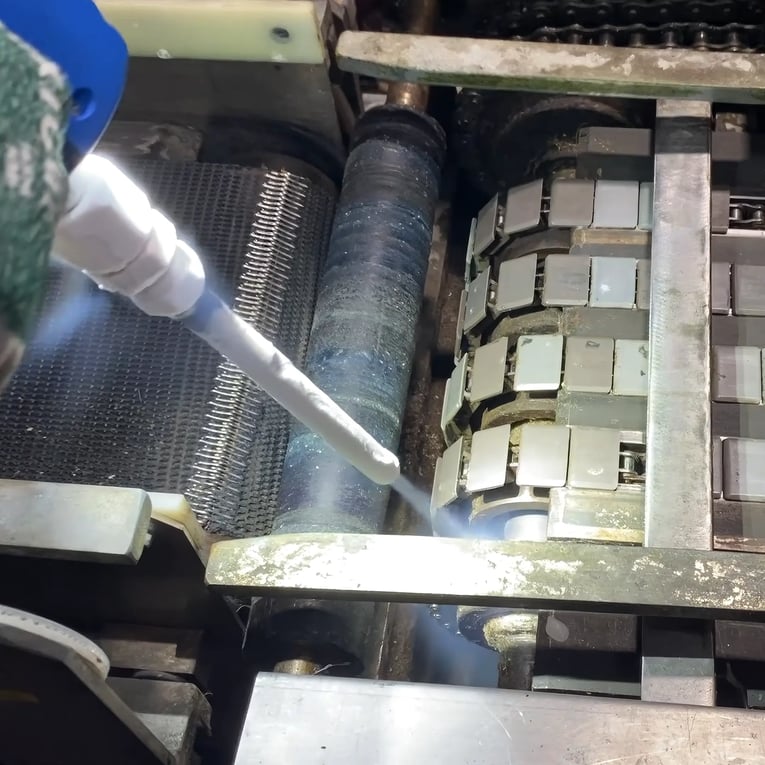
5. Pressure washing can damage electronics:
Water is a highly conductive substance that can have a profoundly negative effect on electronic components, wires, panels, motors, or most anything with an electrical circuit. When using a liquid or moisture-based industrial cleaning method, sensitive components need to be covered and protected, adding precious time to the entire cleaning process. Electrical dangers that can occur include electrical system short circuits or a complete malfunction of components.
Where dry ice blasting has a competitive advantage:
Dry ice is naturally non-conductive and will not harm electronic components. Dry ice blasting does not use liquids or water for cleaning, so it can be used to clean electronics in-place and connected.
6. Pressure washing requires extensive PPE gear to operate safely:
Best safety practices state that operators should wear proper PPE when pressure washing due to the following potential accidents:
- Skin absorption or burns from chemical splashes
- High-velocity debris ricochets
- High decibel noise
- Scalding from hot water splashes
- Accidental spraying of a body part with pressure washer water stream
Extensive PPE precautions must be enacted to avoid irritation or damage to the skin, eyes, face, and other body parts of the operator. PPE recommendations that follow safety regulation guidelines such as OSHA 29 CFR 1910 include the following when pressure washing:
- ANSI Z87.1-certified, fully sealed wrap-around goggles that prevent water, mist, or airborne chemical particles from entering the eyes
- Full face shield to protect the face from chemical splashes or high-velocity particle ricochets
- Full Tyvek suit or waterproof overalls to protect skin and body parts; pants should always be worn OVER boots to prevent drainage into footwear
- Heavy-duty waterproof gloves with textured grip to protect skin; thermal insulation necessary when power washing with heated water
- High-quality ear protection to mitigate the high-decibel noise created by pressure washing equipment
- Waterproof steel-toe work boots with slip-resistant soles
- N95 or half-mask respirators when cleaning chemical residues or mold that can become toxic when becoming aerosolized into a mist
- Hard hat in construction zones or industrial areas where a telescoping blast wand is being used to clean above the operator to prevent injury from falling debris
Where dry ice blasting has a competitive advantage:
Dry ice is neither toxic nor an irritant, and overexposure is mitigated through proper ventilation of the work area. Minimal PPE such as gloves, eye protection, and ear protection are typically all that are needed to operate dry ice blasters.
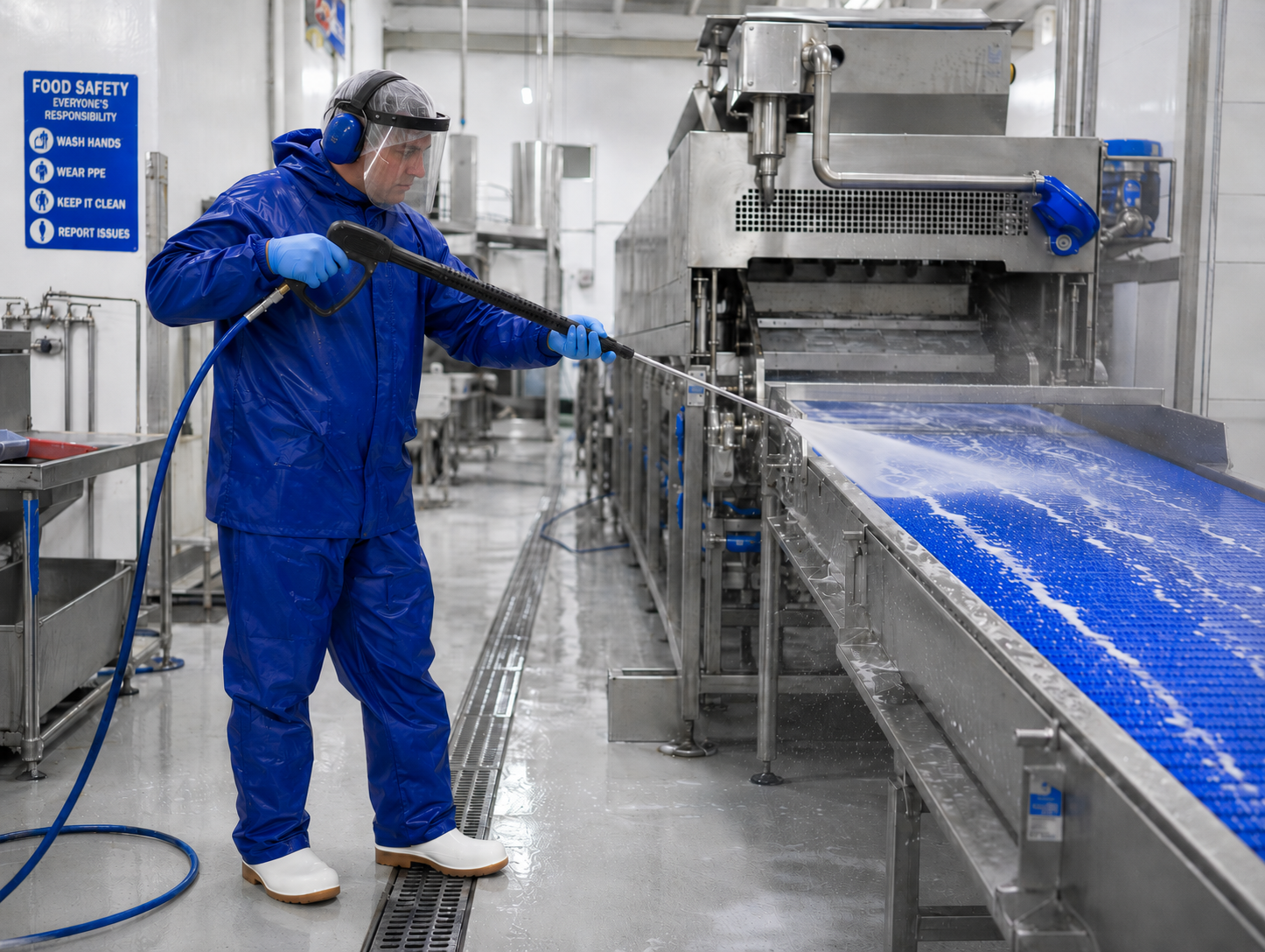
7. Sensitive components must be masked or sealed from water and moisture on larger machines:
Many industrial machines cannot be entirely cleaned by pressure washing due to some critical components that can become damaged or malfunction if exposed to water or moisture. These sensitive components need to be shielded from the high-pressure water stream at all costs, so personnel will often need to use plastic wrapping and tape to seal off all critical areas. When the cleaning is done, the wrapping will then need to be removed before functionality can be restored. These additional steps can be time-consuming and add to the overall downtime required when pressure washing.
Let’s use a real-world example of cleaning a food processing conveyor system—the pressure washing process would follow these steps:
- Shutdown conveyor system via lockout/tagout procedure
- Prepare machinery for pressure washing by covering and taping all water-sensitive components with plastic sheeting such as electronics, sensors, motors, and control boxes
- Scrape off excessive food processing remnants and clumps into waste bins
- Deploy flexible berms around the conveyor system to direct wastewater towards a centralized collection point and place drain mats to prevent accidental drainage into sewer pipes
- Position wet vacuum boom at collection point to transfer wastewater into designated storage tank
- Personnel must put on required PPE gear
- Add food-grade detergent to all necessary parts such as the rollers, belt, and undercarriage; allow 15-20 minutes of soaking time to break down debris
- Connect electric power washer (cannot use gas or diesel model inside food processing facility) to an adequate water source and a power source
- Turn on power washer and allow a few minutes for water to be heated to operating temperature
- Spray conveyor system with power washer to remove contaminants and detergent
- Apply chemical sanitizer on wet surfaces to inhibit bacteria growth
- Vacuum up wastewater into storage tanks or oil separators
- Position and turn on industrial air movers and fans to dry equipment; drying may take multiple hours, depending on equipment size
- Remove plastic wrapping from covered components and remove water collection equipment
- Inspect equipment for water leakage before powering up equipment to resume production
- Arrange for transportation and proper disposal of wastewater at a designated facility
Where dry ice blasting has a competitive advantage:
Cleaning with dry ice blasting allows equipment to remain online, in-place, and at operating temperature during the cleaning process. Often, the only steps required for dry ice blasting are the following:
- Move the dry ice blaster into position near the surface or equipment that needs cleaning
- Plug the machine into a local power source and turn it on
- Hook up the compressed air and attach the necessary blasting hoses
- Insert dry ice pellets into the hopper
- Dial in necessary settings on the dry ice blaster for optimal cleaning such as pellet size, air pressure, and dry ice consumption rate
- Attach the right nozzle for the task to the applicator
- Aim the nozzle at the surface and pull the trigger to begin blasting
All these steps can be accomplished in under 10 minutes. The work area preparations and disposal of waste afterwards required for pressure washing are eliminated.
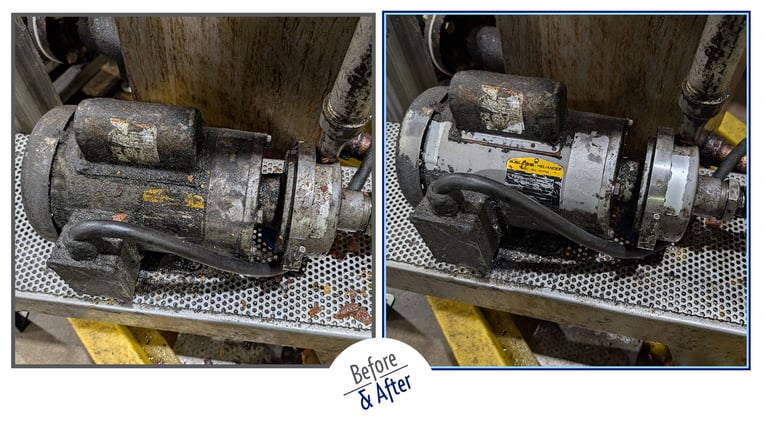
Final Takeaway: For In-Place Industrial Cleaning, Dry Ice Blasting Eliminates the Waste and Downtime Pressure Washing Creates
Pressure washing remains the practical choice for heavy outdoor cleaning work like bulk oil and sludge, storage-tank cleanout, and large surfaces where high water volume and abrasion are advantages. For in-place cleaning of industrial equipment, dry ice blasting takes the lead. Dry ice pellets sublimate into gas on impact, so the process generates no secondary waste, leaves no surfaces to dry, and stays non-conductive. Equipment can be cleaned online and returned to service in minutes instead of hours. Operations that need to minimize downtime, avoid wastewater containment and disposal, or clean sensitive electronics and water-averse components are the strongest candidates for dry ice blasting over pressure washing.
Want an industrial cleaning method that significantly cuts production downtime while delivering fast cleaning results?
Contact Cold Jet to find the best dry ice blasting solution for you!
