.png) English
English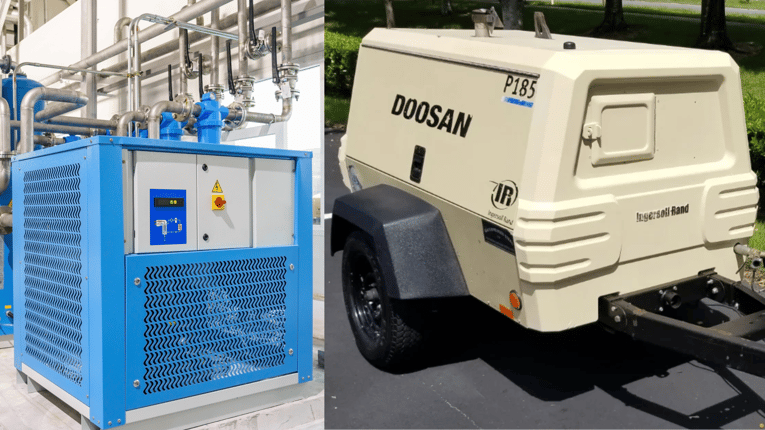
Learn everything you need to know about using compressed air for dry ice blasting, including mobile air compressors, aftercoolers, CFM, PSI, and more!
Key Takeaways:
Top-tier dry ice blaster performance depends on a steady supply of compressed air that is filtered, dry, and cool, delivered at the CFM and PSI levels recommended for your machine and nozzle. This air can come from either a facility air line or an industrial air compressor.
Using dry, high-quality compressed air is an essential part of effective dry ice blasting. Too often, new users of dry ice blasters do not account for the type of compressed air supply needed to adequately operate their machine. This misunderstanding leads to frustration for users, causing misinformed claims that dry ice blasters are not functioning properly, are prone to ice blockages, or are underpowered for cleaning contaminants.
This guide will provide an overview of using compressed air specifically for dry ice blasting, including air requirements, air compressors, and general tips for successful dry ice blasting sessions.
Compressed Air Metrics: What is the Difference Between CFM and PSI?
One of the most critical elements of using the correct compressed air for your dry ice blaster is understanding how to measure its power: Cubic Feet Per Minute (CFM) and Pounds Per Square Inch (PSI). These two factors tell the user the amount of air that is flowing through the dry ice blaster and the pressure behind that air.
Cubic Feet Per Minute (CFM)
CFM measures the overall volume of air flowing through the dry ice blasting system. The CFM required is contingent upon two primary factors:
-
Blast Pressure Range: A dry ice blaster operating at lower blast pressure ranges will require less CFM. If the blast pressure is increased, the blaster will require higher CFM. When recommending required CFM, Cold Jet standardizes blast pressure at 80 PSI. At 80 PSI, dry ice blasters typically need between 50 and 165 CFM to operate efficiently. Microparticle dry ice blasters can consume as little as 12 CFM during delicate work.
-
Nozzle: The nozzle used during blasting is a primary factor in determining required CFM. Different nozzles require more or less CFM to operate effectively. For example, when using the Cold Jet MC31 MicroClean2 nozzle, it requires 50 CFM at 80 PSI. If you lower the blast pressure to 40 PSI, you're only consuming 25 CFM.
Pounds Per Square Inch (PSI)
PSI measures the physical force of the air being pushed through the blaster nozzle. The common rule of thumb to remember is that higher pressure equals greater impact. The standard baseline for most industrial dry ice blasters is an operating range between 20 and 250 PSI. High-pressure models can operate up to 300 PSI for more aggressive cleaning tasks and most blasters can operate at as little as 20 PSI.
To ensure effective operation, your compressed air source must supply adequate air pressure and volume. Plant air at most manufacturing and industrial facilities will provide sufficient air volume and pressure. If you're using a mobile air compressor, ensure it's capable of providing sufficient air based on your machine's recommended air requirements.
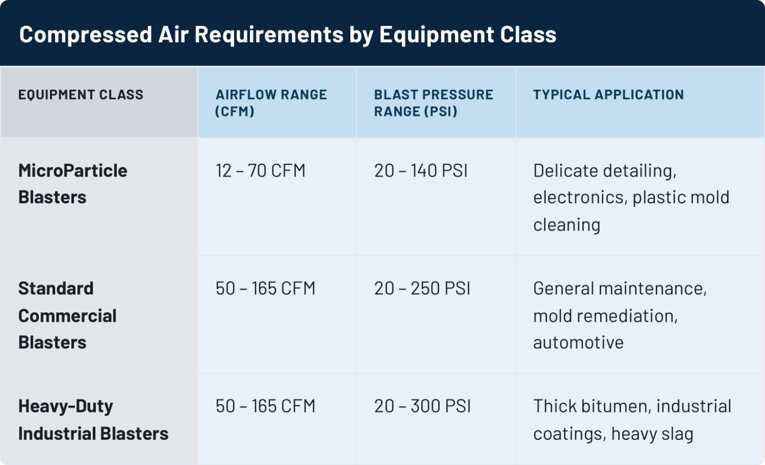
* All CFM ranges are based at operating at 80 PSI blast pressures. If the blast pressure is reduced, the CFM required is also reduced.
What Sources of Compressed Air Should Be Used in Dry Ice Blasting?
There are two common forms of compressed air sources used by dry ice blasters: facility compressed air (plant air) and mobile air compressors.
Choosing to use either a diesel-powered mobile air compressor or plant air will depend on the work environment and the type of surfaces being cleaned.
Facility Compressed Air Lines (i.e., “plant air”)
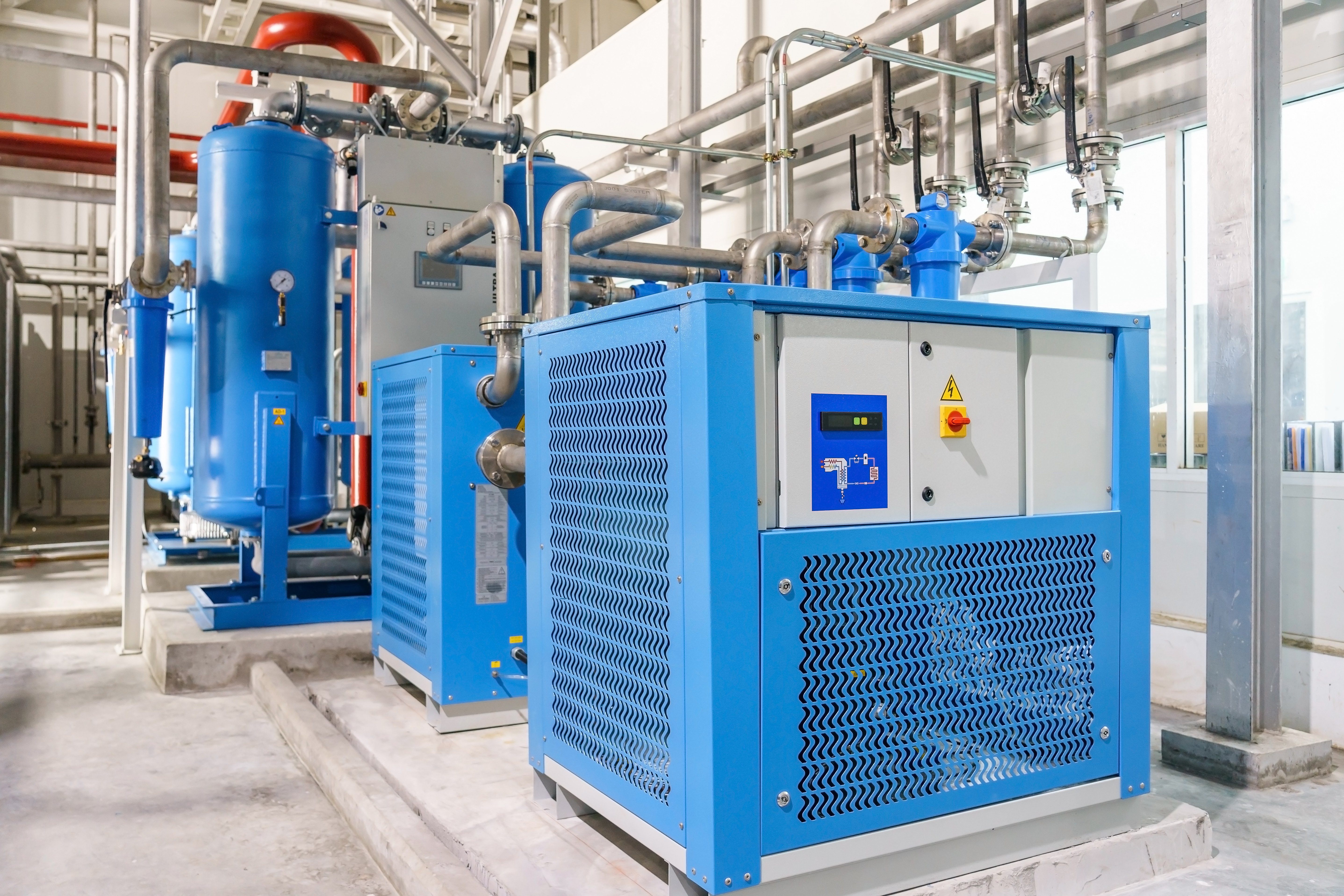
Most facilities can supply dry ice blasters with sufficient CFM and PSI through the air lines built into the building. Because factories, plants, and processing facilities run a variety of tools that depend on a pneumatic system, they're designed to maintain a consistent flow of filtered dry air for daily operations. Connection points are usually available along walls and corridors for easy access.
Before starting a cleaning session, ensure your plant air can supply enough CFM and PSI to run your dry ice blaster along with any other tooling drawing on the same line, such as pneumatic tools. The more tools using the system at once, the greater the total demand—so it is worth confirming that there is enough capacity to support everything running concurrently.
Mobile Air Compressors
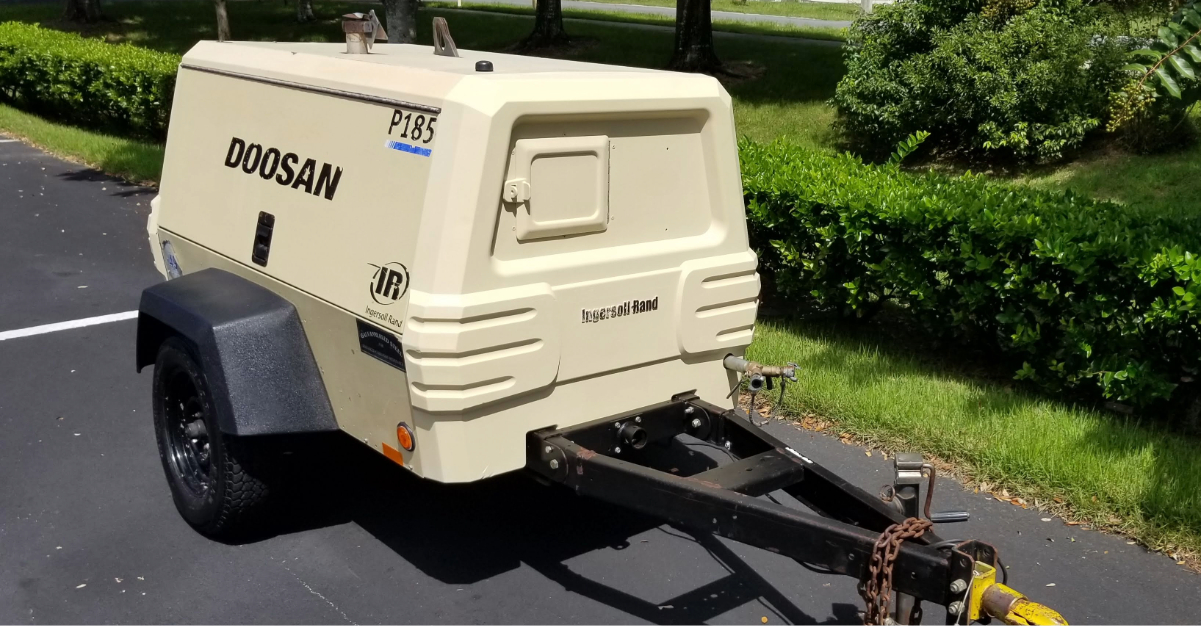
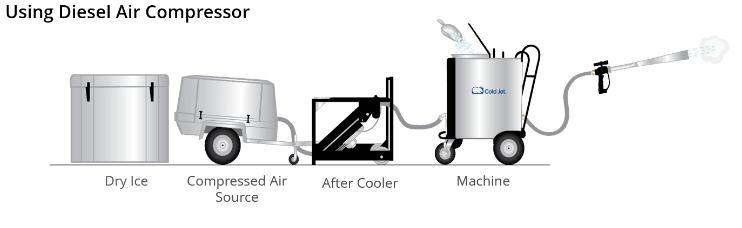
A diesel-powered mobile air compressor is the best choice when cleaning tasks fall outside the reach of a facility's compressed air line, or take place in remote or outdoor work environments. A mobile unit is also a good option when you need more capacity than the facility's air line can provide for the dry ice blaster.
If you're using a mobile air compressor for indoor cleaning tasks, place the compressor outside for proper exhaust ventilation and noise reduction, then run a longer air hose to the dry ice blaster inside. When running a longer length of hose, make the proper CFM adjustments to account for the additional friction air drops.
Can You Use a Small Shop Air Compressor for Dry Ice Blasting?
While using a small shop air compressor is not recommended for dry ice blasting, certain 35-horsepower rotary screw air compressors that run on single-phase electricity can work for light blasting activity.
Most standard small shop air compressors (which typically deliver a maximum of 15 CFM at 90 PSI and have 80-gallon tanks) cannot be used for commercial dry ice blasting as they lack the continuous air volume required to achieve optimal blaster performance.
Air Quality Requirements for Dry Ice Blasting: Clean, Dry, and Ambient
To optimize dry ice blasting performance and protect sensitive substrates, compressed air should be clean, dry, and oil-free. Filtered, dry air at ambient temperatures and free of airborne contaminants is optimal for dry ice blasting for these key reasons:
- Filtration: Air impurities can negatively affect the dry ice particles or cause abrasive surface damage to substrates being cleaned.
- Dryness: Dry ice is extremely cold at -109°F (-78.5°C), so any moisture left in unconditioned compressed air can freeze when it reaches the dry ice inside the machine. That ice binds the pellets together, which can clog the feed system, foul the dosing rotor, and interrupt the flow of dry ice to the nozzle. Humid environments make this occurance more likely, which is why an aftercooler or air dryer is recommended when moisture is a concern.
- Ambient Temperature: Air that is too hot can cause dry ice particles to prematurely sublimate (transition from a solid to a gas) before they exit the nozzle. Compressed air must be cooled down to be within 15°F of ambient temperatures to be optimized for dry ice blasting.
Why You Need an Aftercooler with Diesel Air Compressors for Dry Ice Blasting
While facility air lines are pre-conditioned for blasting, diesel air compressors create hot, humid air that contains impurities. In the case of mobile air compressor units, additional equipment is needed to ensure the air being fed to the dry ice blaster is fully optimized. An aftercooler is an essential device that must be used in conjunction with any mobile industrial air compressor to remove excessive heat from the air, bringing it down to ambient temperature before it enters the dry ice blaster. Weekly aftercooler rentals run about $150 to $350, while brand-new purchases range from $3,500 to $6,000.
How Does Friction Pressure Drop Affect Dry Ice Blaster Performance?
A key metric in controlling compressed air pressures for sustained dry ice blasting is the difference between the marketed CFM and PSI rating of an air compressor and its real-world performance. As compressed air travels through the blasting system and down the length of the hose, it encounters internal friction. This friction causes a pressure drop below the compressor’s nominal rating, which can drastically reduce cleaning efficiency.
For example, if a task requires 100 CFM at 80 PSI and your compressor is rated for exactly those numbers, the nozzle will see less than 80 PSI in practice because air loses pressure to friction as it travels through the hoses, fittings, and machine. Longer or narrower hoses increase that friction and compound the loss. A good practice is to choose a compressor rated above your machine's minimum CFM and PSI requirements so you still meet them at the nozzle after losses.
Mobile Air Compressor Types for Dry Ice Blasting
If dry ice blasting tasks require a more mobile source for compressed air, there are multiple mobile industrial air compressor options to meet contractor and maintenance technician needs:
Final Takeaways: Using the Right Source of Compressed Air Makes or Breaks Dry Ice Blaster Performance
Using a proper industrial air compressor or plant air that delivers adequate CFM and PSI for your dry ice blasting needs is essential to achieving effective cleaning results. If using a diesel air compressor, make sure an aftercooler is in place to purge the incoming air of excessive heat, moisture, and impurities, which keeps the dry ice blaster from suffering freeze-ups or feed mechanism malfunctions. Keep in mind that friction causes pressure to drop between the compressor and the nozzle, so account for those losses—along with any other tools drawing on the same supply—when confirming your air source is sufficient. To verify your compressed air supply is adequate, check the air volume and pressure requirements of your dry ice blaster or consult with a Cold Jet representative.
Need more advice on which air compressor to use for your dry ice blaster? Contact Cold Jet to make sure your compressed air setup is engineered for peak performance!
