.png) English
English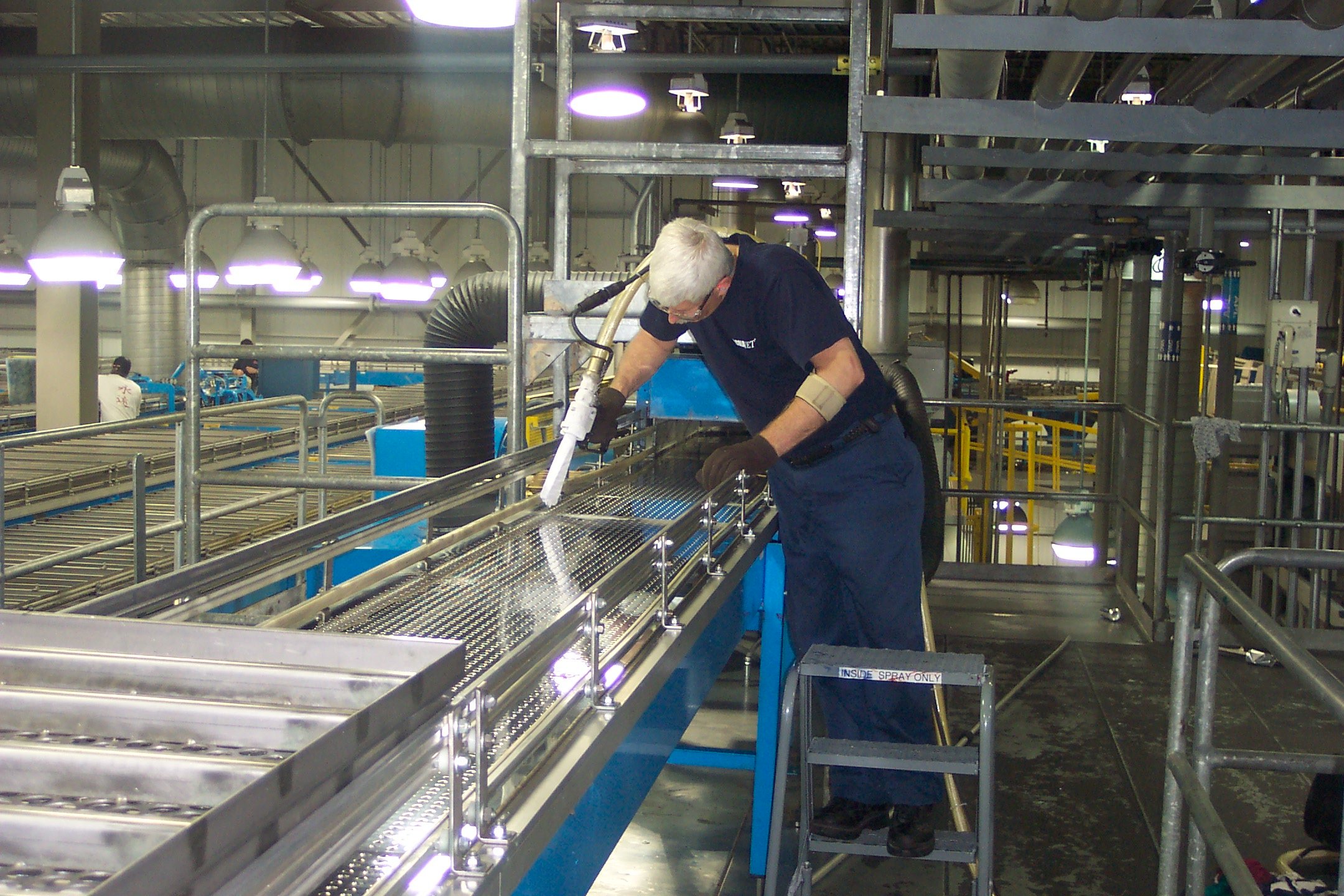
A Dry Ice Blasting Success Story
A commercial bakery in Texas was seeking a solution to its cleaning problem. Frequent cleaning was necessary to remove heavy layers of minerals, oils, bread crumbs, and other buildup from their equipment and tooling.The bakery was previously utilizing the traditional cleaning methods of pressure washing and manual hand washing.
The Problems with Traditional Cleaning Methods
The former cleaning approach presented a number of significant issues:
- Labor intensive
- Lengthy and time consuming
- Required a large cleaning team
- Creation of secondary waste streams
- Extended time required to wrap electrical components
For example, the bakery’s cleaning process for the conveyor in a bread cooler, which moves baked goods from the oven, involved a crew of 25 people working 8-10 hours.
The bakery experienced the same issue when cleaning other areas, such as their bread proofers and baggers. Cleaning these machines involved at least two hours of setup time to wrap electrical components.
Can dry ice clean delicate electronics? >>

This method also does not clean deep enough to completely remove the layers of residue from the cooler, proofer, grids, baggers and floors.
The use of the pressure washer also required the company to wrap all electrical components prior to cleaning and then designate a few crew members to collect the water. The crew must remove all wastewater and ensure that the equipment is completely dry before the parts can be reassembled and production could begin again.
“No matter how hard you try, water gets everywhere, and even after trying to remove the water, moisture remains,” said the Quality Assurance (QA) Manager. “In a baking environment, we are highly concerned about the long-term quality and shelf life of our products. Where there is moisture or build-up, there is a greater chance of a biological growing. We were spending a lot of time, money and labor resources to keep the line clean and maintain our high sanitation standards.”
Want to learn more about other cleaning options?
Check out the blog: Dry ice blasting vs. alternative cleaning methods
The Solution: Dry Ice Blasting
Encouraged by the effectiveness of dry ice cleaning systems at two sister plants, the QA Manager brought in a dry ice blaster for testing.
Dry ice cleaning utilizes a non-abrasive media in the form of recycled CO2 pellets that won’t damage surfaces or equipment. The cleaning action is achieved through the combination of the kinetic energy of the pellets and thermal effects, which break the connection between the dirt and the surface, lifting away contaminants.
Unlike power washing or steam cleaning, dry ice cleaning:
- Does not leave any secondary waste (dry ice sublimates to gas).
- Is safe and non-toxic.
- Eliminates water and moisture from the cleaning process.
- Does not create downstream contamination.
- Reduces or eliminates employee exposure to chemical cleaning agents.
- Is non-abrasive and will not damage equipment.
If you want to learn more about how dry ice blasting works check out our blog: How Dry Ice Blasting Works: The Science Behind the Process?
The Results: Immediate and Measurable Return on Investment
1. Time and Cost Savings
The bread cooler and mile-long conveyor, which previously took 25 people working 8-10 hours to clean, now takes only two people less than six hours with dry ice blasting.
In a side-by-side experiment, a crew of four using hand washing took more than four hours to clean a bagger machine, while a second crew of two using dry ice cleaning took less than an hour.
The sanitation department was able to significantly reduce staffing, while the remaining crew is now able to focus on other areas of the plant. By reducing the people and time required to clean, the bakery was able to recoup 24-30 hours per person per week that can be allocated to other cleaning and maintenance projects.
“We simply did not have downtime to clean some pieces of equipment to our standards,” noted the QA Manager. “But because of the speed and effectiveness of the dry ice blasting system, we now have the time and resources to attend to a variety of other areas of the plant.”
2. Elimination of Water and Moisture
With the dry ice cleaning process, the plant no longer has to worry about water residue or moisture. Crew members no longer have to bag the electrical components, and the possibility of harmful biologicals has been reduced.
“We do significant testing to determine how clean our equipment is after cleaning, and with dry ice cleaning, we are able to do more than simply removing debris,” noted the QA Manager. We are actually sanitizing our machines, which will have a positive impact on the long-term quality of our products and the life of our equipment.”
3. Reduced Equipment Damage
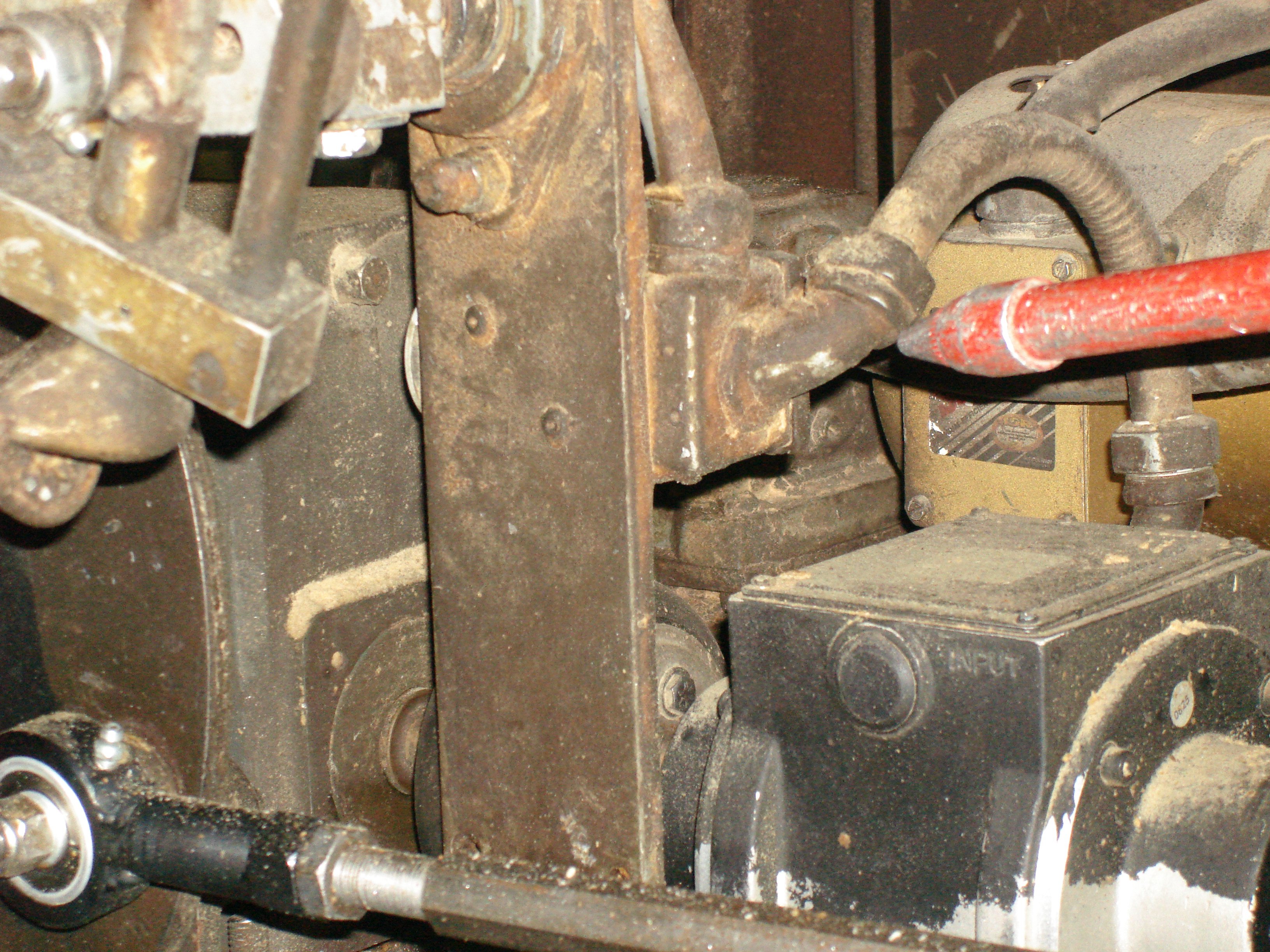
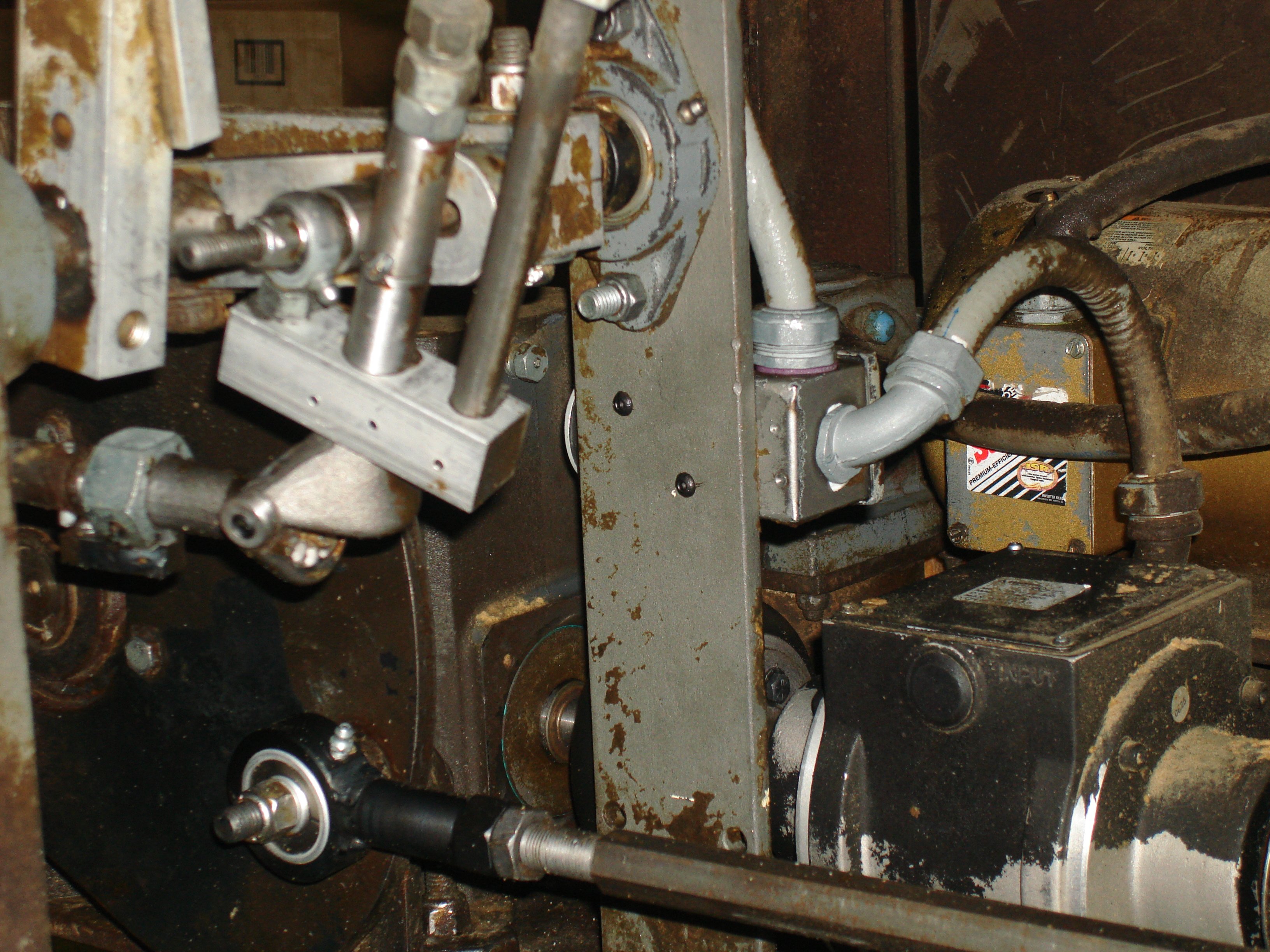
The dry ice blasting process is soft enough that it doesn’t peel paint, impinge electrical conduit, damage laser and infrared photo eyes, or remove the mineral oils on the conveyor. Yet, it is powerful enough to remove several years of built-up residue from production line machines.
“Much of the equipment in a high-speed baking plant is simply not designed to be cleaned easily,” explained the QA Manager. With the dry ice system, we are cleaning things that I have never seen cleaned in the decade I have been in the industry.”
Learn about dry ice blasting in food and beverage facilities >>
Before
After
If you want to read about other customer success stories, visit our case study page!
